When a medical emergency occurs on the streets of San Francisco, every second counts. Whether you are strolling through Golden Gate Park, grabbing lunch near the Sunset District, or commuting through downtown, knowing how to handle a cardiac event can save a life. Unfortunately, decades of dramatic movie scenes and outdated rumors have left many people confused about how resuscitation actually works.
Believing everyday misconceptions can delay critical care. To clear up the confusion, our veteran instructors at Safety Training Seminars are tackling five widespread myths about life-saving care. If you want to replace television fiction with real, hands-on skill, enrolling in an official CPR and First-aid Certification Course gives you the exact techniques you need to step up with confidence.
Quick Facts: CPR & First Aid Training at a Glance
| Feature | Details |
| Official Provider | American Heart Association (AHA) |
| Certification Delivery | Same-day AHA eCard issued immediately after class |
| Class Formats | In-person classroom training & HeartCode® blended online options |
| Target Audience | Healthcare providers, educators, parents, and local workers |
| Local Office | 1960 Taraval St, San Francisco, CA 94116 |
| Parking & Transit | Street parking along Taraval St; steps from the Muni Metro L Bus line |
Myth 1: CPR Will Instantly Wake Someone Up Like in the Movies
Hollywood loves a dramatic scene: a character collapses, someone presses on their chest for five seconds, and the victim sits up coughing and talking. In real life, chest compressions rarely bring someone back to full consciousness immediately.
The primary goal of performing chest compressions is not to wake the person up, but to act as a manual heart pump. Compressions keep oxygen-rich blood flowing to the brain and vital organs until an Automated External Defibrillator (AED) arrives or emergency responders from the San Francisco Fire Department take over.
According to data from the American Heart Association (AHA), immediate CPR can double or triple a person’s chances of survival during out-of-hospital cardiac arrest.
Expecting an instant wake-up can make bystanders panic and stop compressions prematurely. In our local CPR classes in San Francisco, CA, students practice continuous, high-quality compressions on responsive manikins so they build the physical muscle memory required to maintain steady blood flow during an actual crisis.
Myth 2: You Need to Give Mouth-to-Mouth for CPR to Work
One of the biggest reasons bystanders hesitate to help a collapsing stranger is the fear of performing mouth-to-mouth resuscitation. Fortunately, modern guidelines have changed significantly over the last decade.
If you see a teen or adult collapse suddenly in public, Hands-Only CPR is highly effective. Hands-Only CPR involves two simple steps:
- Call 911 immediately.
- Push hard and fast in the center of the chest at a rate of 100 to 120 beats per minute.
For the first few minutes of a sudden cardiac arrest, the victim’s blood still contains residual oxygen. Pushing continuously on the chest pumps that remaining oxygen directly to the brain. Rescue breathing remains vital for infants, children, drowning victims, and opioid overdose situations. Taking a comprehensive CPR & FIRST AID training in San Francisco, CA ensures you know when compressions alone are enough and when full rescue breaths are necessary.
Myth 3: Using an AED Is Too Complicated for a Regular Person
Automated External Defibrillators look intimidating. Many people worry that pressing the shock button could accidentally electrocute someone who doesn’t need it.
Modern AEDs are designed specifically for lay rescuers. Once opened, the device delivers clear, spoken voice prompts guiding you through every step. It automatically analyzes the patient’s heart rhythm and will only deliver or instruct you to deliver a shock if the person is in a shockable cardiac rhythm (such as ventricular fibrillation). You literally cannot shock someone who does not need it.
[Open AED] ➔ [Attach Pads to Bare Chest] ➔ [Stand Clear for Analysis] ➔ [Deliver Shock if Prompted]
AEDs are positioned all across the city—from San Francisco International Airport (SFO) to local community centers and transit stations. Gaining hands-on practice with trainer AEDs at a local CPR training center in San Francisco, CA removes the fear factor entirely.
Myth 4: You Can Be Sued if You Help Someone and Make a Mistake
Fear of legal repercussions stops many well-meaning bystanders from acting. In California, state laws specifically protect people who step up during emergencies.
Under California’s Good Samaritan Law (Health and Safety Code Section 1799.102), individuals who render emergency care in good faith at the scene of an emergency are protected from civil liability. The law exists because doing something is almost always better than doing nothing when a heart stops beating.
Healthcare workers and first responders maintain professional duties of care, but everyday citizens who assist in an emergency are sheltered by these legal protections. Completing an official CPR & First Aid Course in San Francisco, CA gives you both the legal understanding and the practical skills to help safely.
Myth 5: A Basic CPR Class Covers Every Professional Requirement
Many people assume a quick online video or basic CPR overview satisfies all job and licensing rules. In reality, healthcare workers and general community members require entirely different training tracks.
If you work in healthcare, an introductory community CPR card will not meet hospital credentialing standards. You need specialized training designed for medical environments:
- Healthcare Professionals: Nurses, physicians, EMTs, and dental staff require an AHA BLS CPR Certification Class in San Francisco, CA.
- Advanced Care Providers: Hospital staff working in emergency rooms, ICUs, or surgery centers need advanced credentials like AHA ACLS Certification Classes in San Francisco, CA or specialized AHA PALS Certification training in San Francisco, CA.
- General Public & Teachers: Educators, daycare employees, construction managers, and personal trainers need general workplace-compliant courses.
A Local Scenario: Emergency in the Sunset District
Consider a typical afternoon along Taraval Street. An off-duty dental assistant from a clinic near UCSF Helen Diller Medical Center is grabbing coffee near 20th Avenue. Suddenly, an older gentleman collapses on the sidewalk.
Because the dental assistant recently refreshed her skills in a BLS Certification Course in San Francisco, CA, she doesn’t freeze or worry about mouth-to-mouth myths. She immediately asks a nearby shop employee to dial 911, checks for breathing, and begins firm chest compressions to the rhythm of “Stayin’ Alive.” Another bystander runs into a nearby pharmacy to grab an AED. By the time emergency vehicles arrive from the local fire station, the patient’s central circulation has been maintained for critical minutes, significantly improving his chances of recovery.
Who Needs a CPR and First-aid Certification Course?
Life-saving skills are essential across almost every industry in the Bay Area. Here is a breakdown of who regularly takes our courses:
- Healthcare Workers & Students: Nursing students attending the University of San Francisco (USF) or San Francisco State University (SFSU) preparing for clinical rotations require a valid CPR BLS class in San Francisco, CA.
- Advanced Medical Personnel: Physicians, paramedics, and critical care nurses working at facilities like UCSF Medical Center or Zuckerberg San Francisco General Hospital need specialized ACLS Certification course in San Francisco, CA or PALS Certification training in San Francisco, CA credentials.
- Childcare Providers & Teachers: Licensed daycare workers and preschool educators must maintain state-mandated EMSA-approved first aid and pediatric CPR credentials.
- Fitness Trainers & Coaches: Personal trainers at local gyms along Ocean Beach or the Marina District need current CPR/AED cards to keep their national certifications active.
- Construction & Corporate Staff: Safety leads across Bay Area commercial construction sites need first aid readiness to satisfy OSHA workplace standards.
What to Expect During Your Class
Learning life-saving techniques should be engaging, hands-on, and stress-free. When you attend training at our local facility at 1960 Taraval St, you get a structured learning experience guided by American Heart Association guidelines.
1. Hands-On Skill Practice
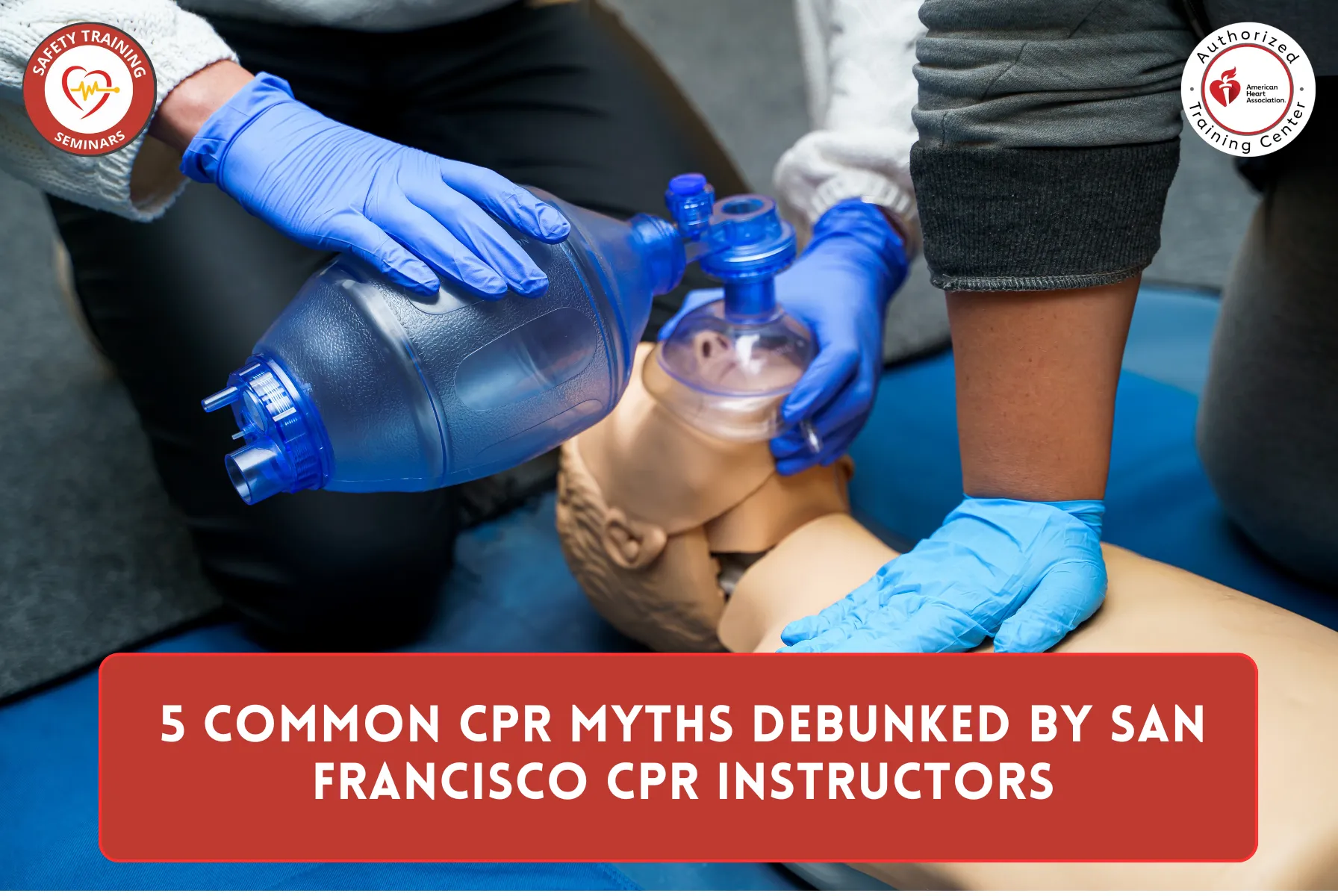
You will work directly with individual manikins to master proper hand placement, compression depth (at least 2 inches for adults), and recoil speed. You will practice using pocket masks and bag-valve masks for effective ventilation.
2. AED Operation
Students practice placing electrode pads, turning on trainer AED units, and clear team communication while following step-by-step audio prompts.
3. Pediatric & Infant Care
You will practice specialized techniques for infants and children, including delicate chest compressions using two fingers or thumbs and gentle relief techniques for choking babies.
4. Same-Day Certification
After completing your practical skills evaluation, you receive your official American Heart Association eCard directly in your inbox the same day—no waiting weeks for paper mail.
Frequently Asked Questions
How long is my CPR and First Aid certification valid?
American Heart Association certifications for BLS, CPR, First Aid, ACLS, and PALS are valid for two years from the end of the month in which the class was completed.
Do local hospitals accept AHA certification cards?
Yes. The American Heart Association (AHA) is the gold standard for healthcare institutions across the country, including UCSF Medical Center, Sutter Health, and Kaiser Permanente.
Can I take part of the course online?
Yes! Safety Training Seminars offers AHA HeartCode® blended courses. You complete the adaptive self-paced online coursework on your computer, then schedule a short, hands-on skills session at our Taraval Street office.
How soon will I receive my certification card after class?
Your official AHA eCard is issued digitally on the very same day you successfully pass your hands-on class evaluation.
What should I wear to my hands-on practice session?
Wear comfortable, casual clothing. You will be spending time on your knees practicing chest compressions on floor manikins.
Get Certified with San Francisco’s Trusted Training Provider
Dispelling CPR myths is the first step toward becoming a capable, confident responder. Whether you need to meet clinical rotation requirements, fulfill employer safety guidelines, or simply protect your family at home, having hands-on training makes all the difference when seconds count.
Located conveniently at 1960 Taraval St, San Francisco, CA 94116, Safety Training Seminars offers weekly morning, evening, and weekend classes. Whether you need a standard CPR & First Aid Class, a healthcare provider BLS renewal, or advanced life support training, our expert instructors are here to guide you.
Explore our full range of CPR, BLS, ACLS and PALS courses in San Francisco, CA, check our real-time availability, and secure your spot in an upcoming CPR and First-aid Certification Course today!