Signing up for a CPR and First-aid Certification Course is often prompted by a job requirement, a clinical-placement deadline, or a personal decision to be better prepared. Whatever brings you to class, the goal is the same: learn how to recognize an emergency and take useful action during the first critical minutes.
Safety Training Seminars provides a local training option near San Francisco’s Sunset and Parkside neighborhoods. The verified location is 1951 Taraval Street, San Francisco, CA 94116. Students can register for CPR, BLS, ACLS, PALS, NRP, and First Aid course options with flexible scheduling.
Class at a Glance
| Feature | What Students Can Expect |
| Format | Online learning plus an in-person skills session for the CPR and First Aid option |
| Ages covered | Adult, child, and infant |
| Core practice | CPR, AED use, choking response, and basic first aid |
| Evaluation | Hands-on skills demonstration |
| Scheduling | Daily options, including evenings and weekends |
| Local access | Near Muni service on Taraval Street, with local street parking |
| Certification | Depends on the selected course |
Before You Arrive
The CPR and First Aid option uses a blended format. Students first complete assigned online material and then attend a hands-on skills session.
Give yourself enough time to review adult, child, and infant emergencies, AED basics, choking response, and first aid steps. Read your confirmation email and bring any required completion document. Wear comfortable clothing because CPR practice involves kneeling and repeated upper-body movement.
Students comparing CPR certification classes in San Francisco should also verify whether they need a general community course or a healthcare-specific credential. Use the exact course name provided by your employer or school.
What Happens During a CPR and First-aid Certification Course?
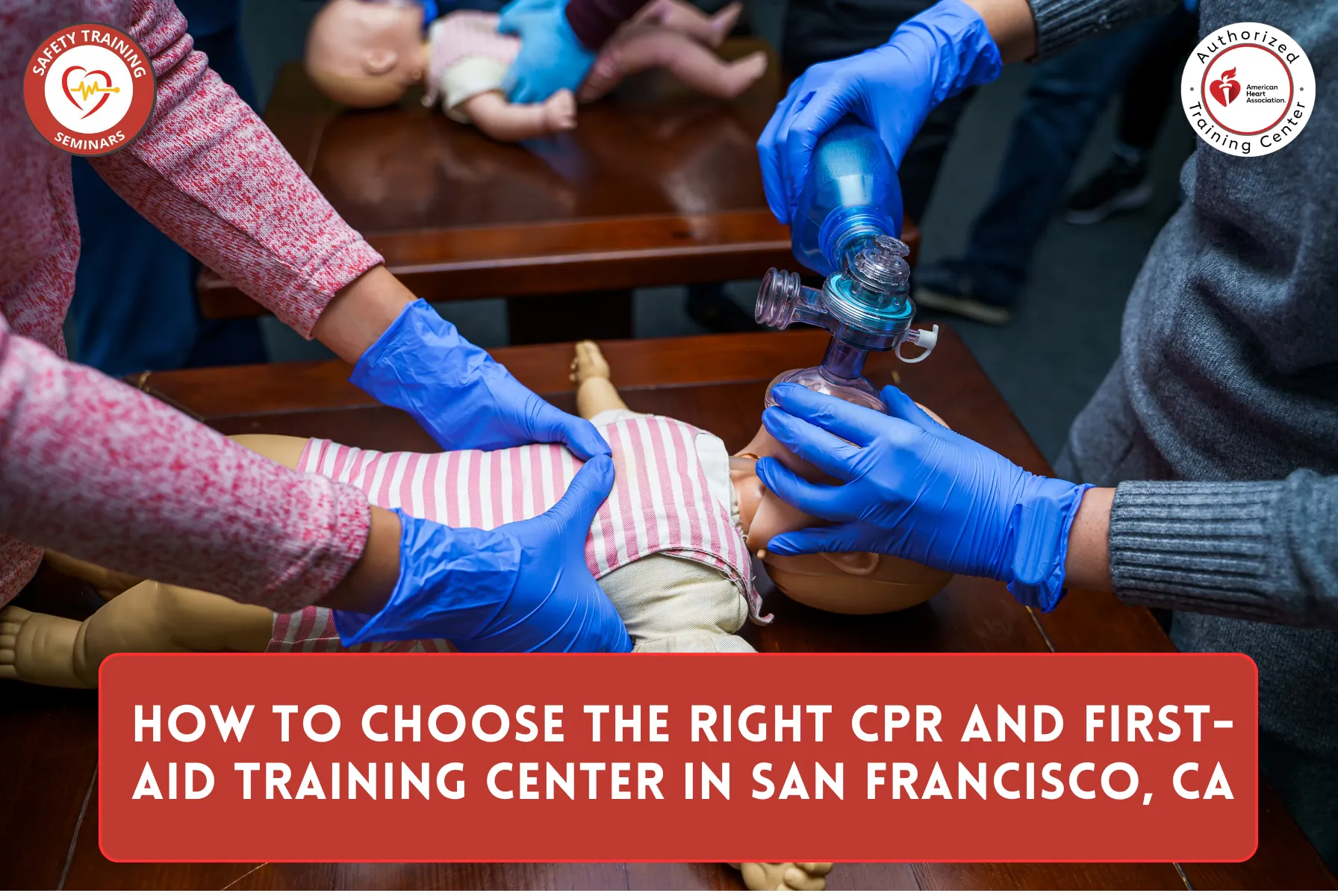
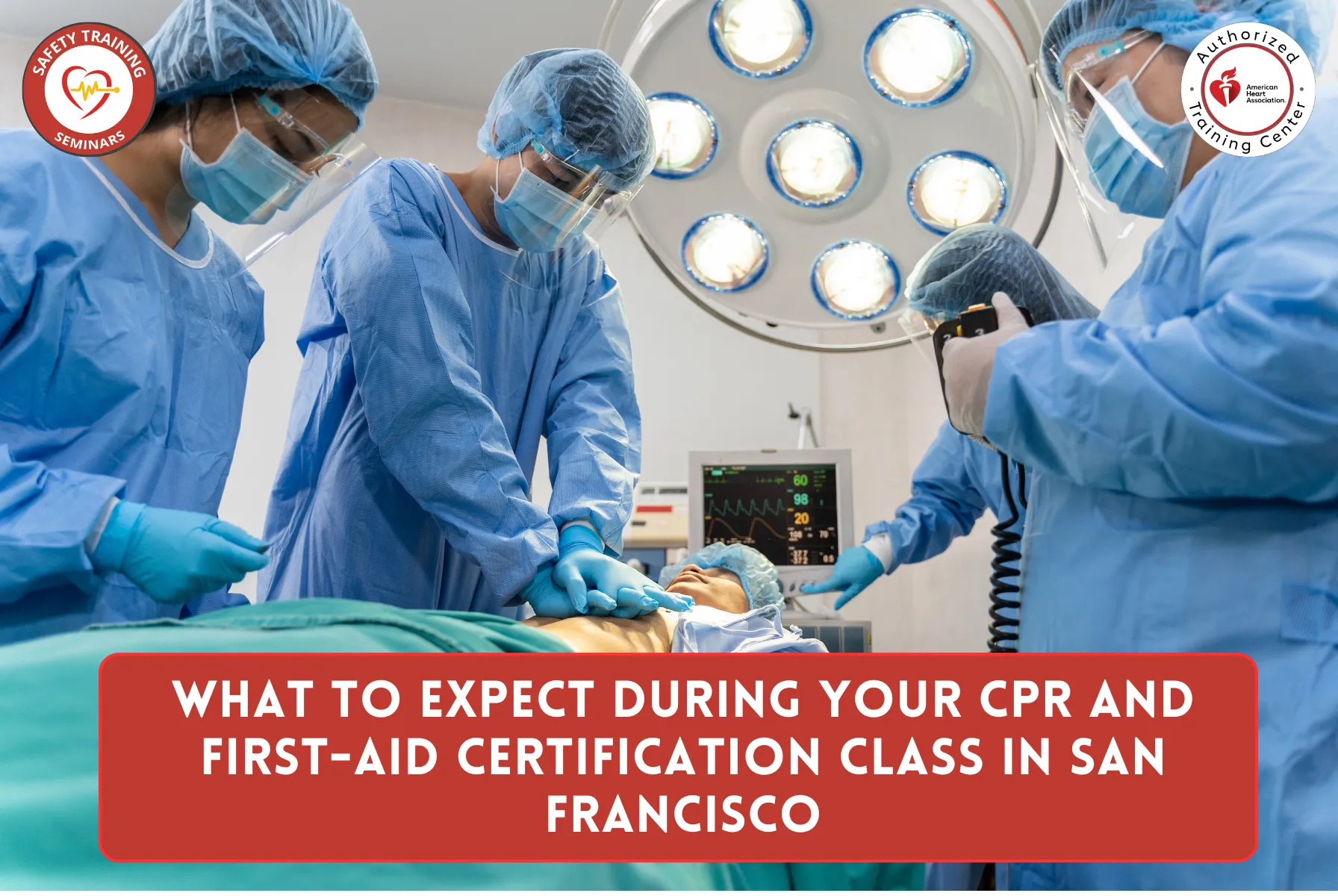
The hands-on session turns written steps into practical skills. Expect to practice, receive feedback, correct your technique, and repeat important actions until you can perform them in the proper order.
Emergency Recognition
Training begins with scene safety and a rapid assessment. You learn to check responsiveness and breathing, call 911, ask someone to retrieve an AED, and begin appropriate care.
The CDC’s cardiac arrest guidance recommends calling 911, locating an AED, and starting CPR when cardiac arrest is suspected.
Adult, Child, and Infant CPR
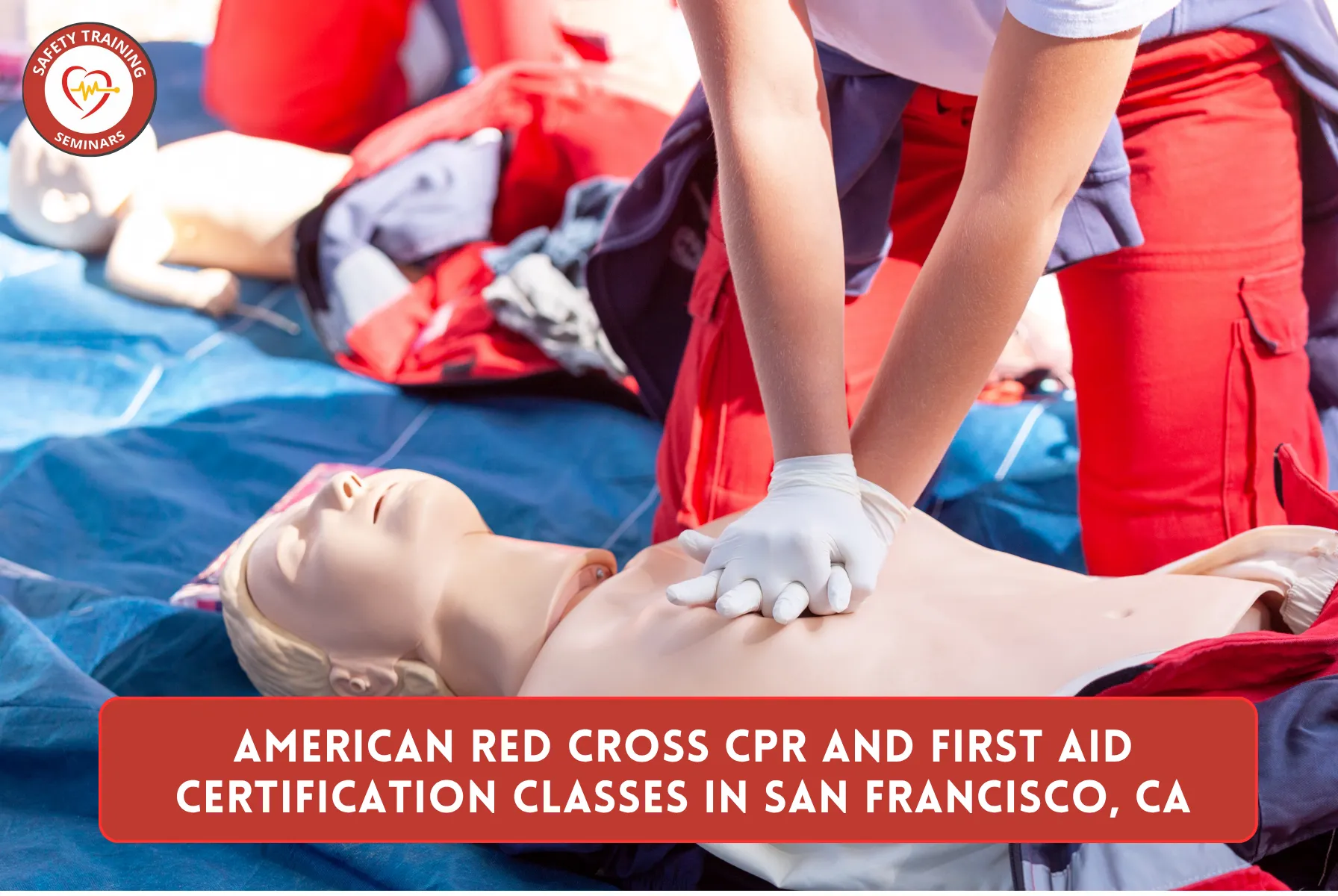
You will practice age-appropriate hand or finger placement, chest compressions, rescue breaths, and safe positioning. Feedback from an instructor or training equipment may help you improve compression rate, depth, recoil, and pauses.
The CPR and First Aid certification class is especially relevant for teachers, childcare providers, coaches, parents, workplace teams, and community members who may need to respond before emergency professionals arrive.
AED and Choking Practice
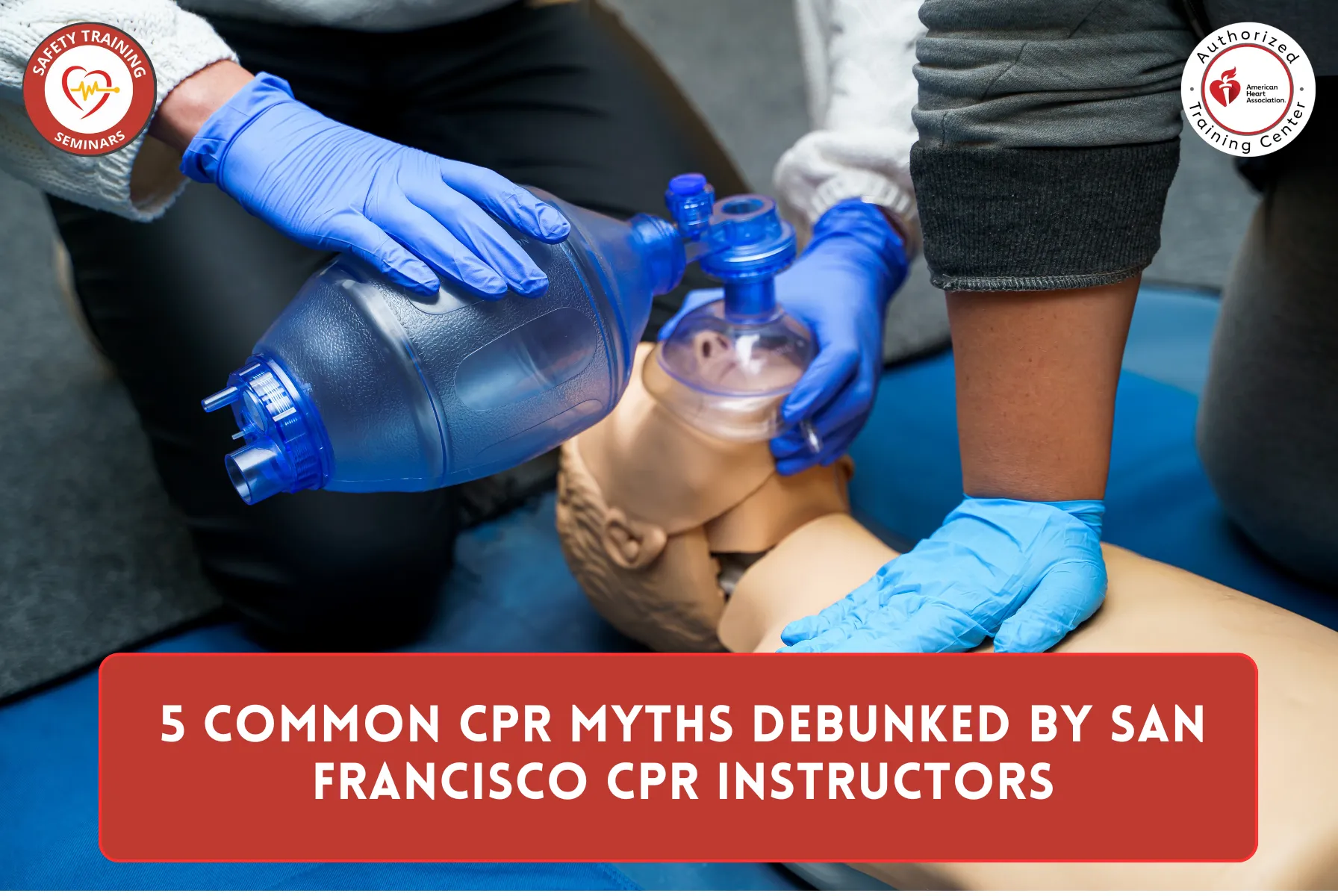
During AED practice, students learn how to turn on the device, place pads correctly, keep others clear during rhythm analysis, and resume CPR promptly.
Choking care changes according to age and condition. You will learn how to recognize severe airway obstruction and how the response differs for an adult, child, or infant.
Imagine a customer collapsing near a busy Taraval Street business. One person calls 911, another retrieves an AED, and a trained bystander begins compressions. Training turns that idea into an organized response.
At a Sunset District preschool, a childcare worker might notice that an infant cannot cough, cry, or breathe normally. Training helps the worker use the correct age-specific technique.
First Aid Skills
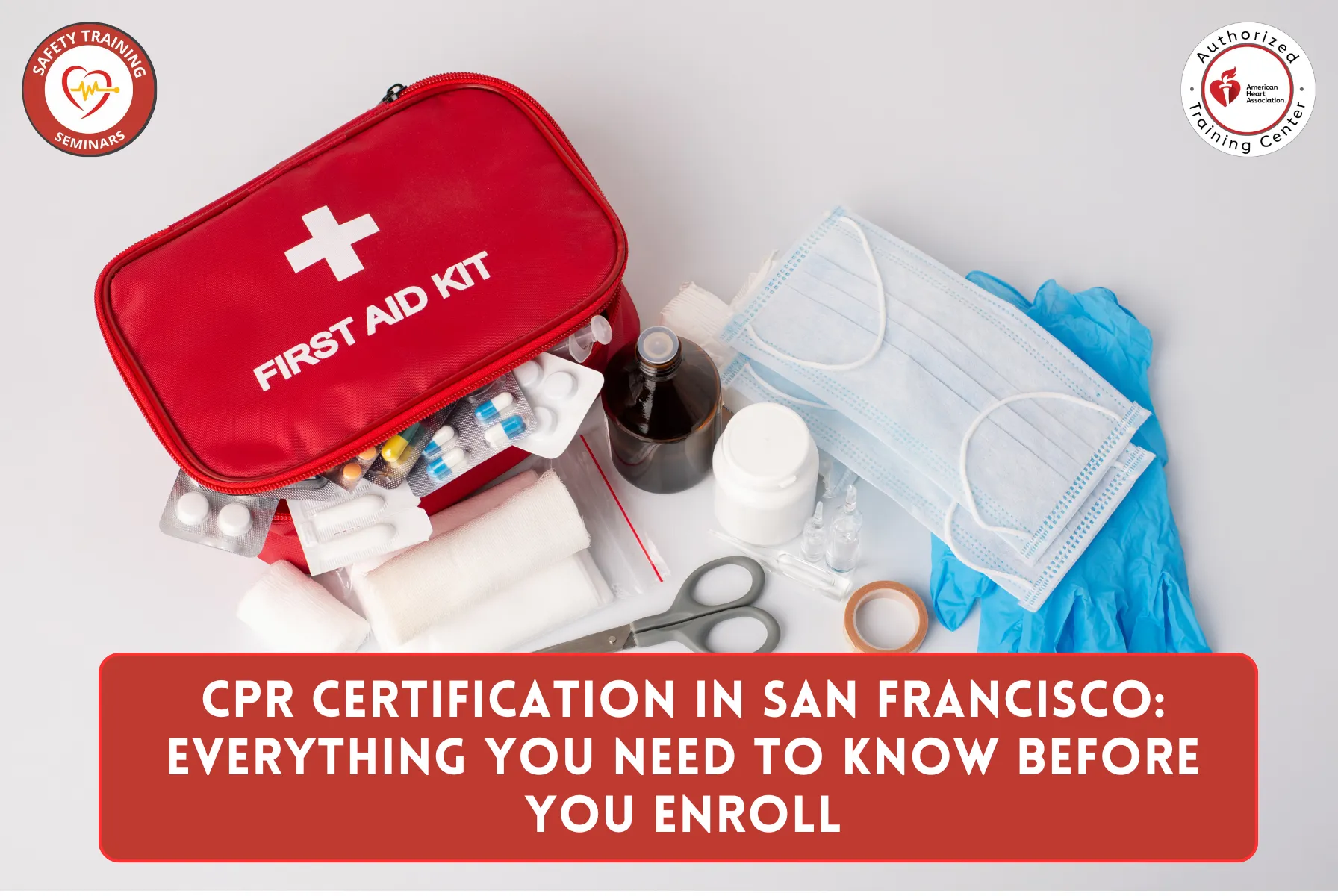
The First Aid portion prepares students to give basic care while waiting for professional help. Topics may include bleeding, shock, burns, sudden illness, allergic reactions, and common injuries.
The focus is on staying safe, assessing the situation, contacting emergency services, and avoiding actions that could make the injury worse.
Skills Testing and Certification
At the end of the session, you demonstrate the required techniques. Testing may include CPR cycles, AED operation, choking response, or a short first aid scenario.
Certification type and delivery depend on the selected course. Safety Training Seminars states that eligible AHA programs provide same-day eCards after successful completion. Save a digital copy and submit it promptly if your employer or school has a deadline.
Why Hands-On Practice Matters
The American Heart Association’s CPR facts state that immediate CPR can double or triple a person’s chance of survival after cardiac arrest.
A learner may understand the steps on a screen yet still feel uncertain about hand placement, compression force, or AED pad positioning. Hands-on feedback helps close that gap and builds confidence in a controlled environment.
Who Should Take This Course?
A CPR & First Aid Class in San Francisco, CA is useful for people who supervise others, work with the public, or need documented safety training.
- Nurses and nursing students commonly need a healthcare-provider BLS Certification Course in San Francisco, CA.
- EMTs, medical assistants, and respiratory therapists need strong CPR, AED, ventilation, and team-response skills.
- Dentists and dental hygienists may need employer-approved training for medical emergencies in dental settings.
- Teachers and childcare providers benefit from pediatric CPR, infant choking care, and First Aid.
- Pharmacists regularly work with the public and may witness sudden illness.
- Coaches and personal trainers may encounter cardiac events, breathing problems, falls, or injuries.
- Security staff may be among the first people called during a workplace emergency.
- Parents and caregivers gain practical preparation for emergencies at home.
Students from San Francisco State University and healthcare trainees traveling from UCSF’s Parnassus area may appreciate a location accessible from Parkside, the Sunset District, West Portal, Ingleside, and Daly City.
Choose the Correct Certification
Not every course serves the same purpose. Before paying, compare the course name in your workplace or school instructions with the registration page.
A CPR BLS class in San Francisco, CA is generally intended for healthcare providers. The AHA BLS CPR Certification Class in San Francisco, CA covers healthcare-focused CPR, AED use, and team response.
An AHA ACLS Certification course in San Francisco, CA addresses advanced cardiovascular emergencies, while AHA PALS Certification training in San Francisco, CA focuses on pediatric emergency care.
The center also offers an NRP certification course in San Francisco for professionals involved in neonatal resuscitation.
Together, these are local CPR, BLS, ACLS and PALS courses in San Francisco, CA, plus NRP and First Aid. Confirm the certifying organization required because a general CPR & First Aid Course in San Francisco, CA is not the same credential as AHA BLS, ACLS, or PALS.
Reaching the CPR Training Center in San Francisco, CA
Safety Training Seminars is located at 1951 Taraval Street, near 30th Avenue. The center is accessible from 19th Avenue, Sunset Boulevard, Great Highway, and Lakeshore Boulevard. Muni service along Taraval Street is useful for students traveling through West Portal and the Sunset District.
Street parking is available, but conditions can vary. Check posted signs and arrive early. Nearby reference points include Stern Grove, Stonestown Galleria, San Francisco State University, and Lake Merced.
Frequently Asked Questions
How long does the CPR and First Aid class take?
The website lists one to two hours of online learning plus approximately one hour for the skills test. Completion time may vary.
Will I practice CPR on a manikin?
Yes. The in-person portion includes practical training and skills testing using professional equipment.
Does the class include infant CPR?
The listed CPR and First Aid option covers adult, child, and infant age groups.
Can nursing students enroll?
Yes, but nursing students should verify whether their program requires healthcare-provider BLS instead of a general CPR and First Aid credential.
Will I receive certification the same day?
Eligible AHA courses provide same-day eCards after successful completion. Confirm the process for your selected class.
Can I renew before my certification expires?
Yes. Early renewal helps prevent a gap in employment, licensing, or clinical-placement documentation.
Are evening and weekend classes available?
The center advertises daily scheduling with morning, evening, and weekend options. Check the current online schedule for openings.
Prepare for Your San Francisco Class
A CPR and First-aid Certification Course should leave you with a clear response plan, stronger hands-on skills, and the correct documentation for your role. Safety Training Seminars offers local CPR, BLS, ACLS, PALS, NRP, and First Aid options at its Taraval Street training center.
For people searching for CPR classes near San Francisco, CA, the location offers online registration, flexible scheduling, hands-on practice, public-transit access, and course-specific same-day certification.
Review your employer or school requirement, choose the correct program, and register for the CPR & First Aid training in San Francisco, CA that fits your needs.