San Francisco has a wide mix of healthcare, education, professional, residential, recreation, hospitality, and community settings, so CPR and First Aid training can serve very different purposes depending on who is taking the class. A healthcare student may need training before a clinical placement, while a teacher, childcare provider, workplace employee, parent, coach, or caregiver may be looking for practical emergency-response skills.
For people researching American Red Cross CPR and First Aid Certification Classes in San Francisco, CA, the right course depends on the situation. Available training can include CPR, First Aid, CPR/AED, and broader First Aid/CPR/AED options, with course formats varying by program. Some learners need hands-on skills practice because of an employer, school, professional, or regulatory requirement, while others may be seeking training for personal preparedness. Checking the specific requirement before registration can help avoid selecting a course that does not meet the intended purpose.
The Short Answer
San Francisco residents and workers can explore American Red Cross CPR and First Aid training according to their workplace, professional, educational, childcare, caregiving, or personal needs. The most appropriate choice may be a CPR-focused course, First Aid training, CPR/AED, or a combined First Aid/CPR/AED program. If certification is required for a job or school, confirm the required course format and skills component before enrolling.
What Do CPR, First Aid, and AED Classes Cover?
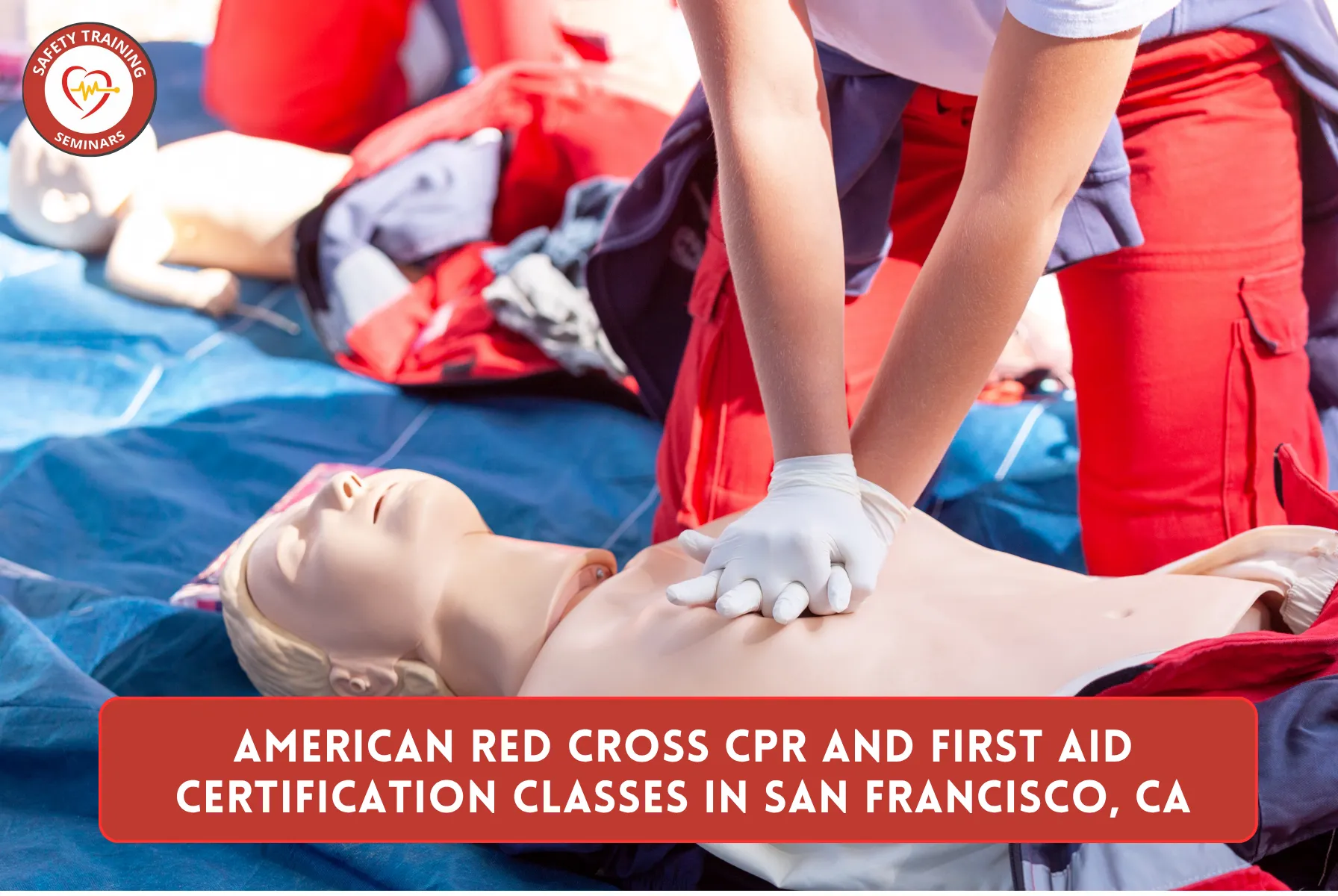
CPR training focuses on responding to cardiac or breathing emergencies. Depending on the course selected, training can address adult, child, and infant situations and may incorporate AED education. American Red Cross offers different CPR and AED formats, including classroom, online, and blended options, although the practical requirements can differ between formats.
First Aid has a broader focus. Rather than concentrating only on cardiac emergencies, First Aid education prepares learners to respond to a range of emergency situations involving adults and children. The exact material depends on the course.
An AED course or CPR/AED course adds instruction related to using an automated external defibrillator. For someone responsible for workplace safety, a combined course can be worth considering when the employer requires both CPR and AED-related training.
Hands-on practice is another important consideration. Someone simply interested in learning emergency-response concepts may have different needs from a healthcare student or employee whose organization requires demonstrated skills. The American Red Cross offers classroom and blended formats that include skills practice, while online-only options may not satisfy every workplace requirement.
CPR Training for San Francisco Residents and Workers
CPR training can be relevant across San Francisco’s varied working and residential environments. A person working in an office near Downtown may have different reasons for taking CPR than someone working with children, older adults, patients, athletes, or customers.
Depending on the selected course, CPR education may cover:
- Adult CPR
- Child CPR
- Infant CPR
- AED-related response
- Recognition of cardiac or breathing emergencies
- Hands-on CPR skills
- Emergency-response decision making
The specific course should be selected according to the population the learner may be expected to assist and the requirement they need to satisfy.
For example, someone entering a healthcare-related program may need a particular CPR course for a clinical or educational requirement. A parent or caregiver may instead want training that addresses children and infants. An employee may need a course selected by the employer’s safety program.
Those looking specifically for local CPR training options can also review CPR and BLS classes in the Bayshore area when comparing nearby training resources.
First Aid and AED Training in San Francisco
First Aid becomes especially relevant when a person’s responsibilities extend beyond responding to a cardiac emergency. Teachers, childcare providers, coaches, fitness professionals, caregivers, parents, workplace employees, and community members may all have reasons to pursue First Aid education.
California childcare requirements are one example where training can have a specific role. California’s Department of Social Services states that family child care providers must complete a 15-hour training course that includes pediatric CPR and first aid, safety, and health education. Child care center programs also have requirements concerning personnel with this training. Because regulatory requirements can change and can depend on the type of facility or role, childcare professionals should verify the current requirement applicable to them.
AED training complements CPR because an AED is designed to be used during certain cardiac emergencies. For a workplace or organization considering emergency-response training, a combined First Aid/CPR/AED option may provide broader coverage than a CPR-only course.
Who in San Francisco Commonly Looks for This Training?
Healthcare Workers and Students
San Francisco’s healthcare and medical environment creates demand for training among people entering healthcare programs, working in support roles, or completing clinical education. The required course can depend on the school, employer, professional role, or clinical organization, so students should check their program’s exact instructions.
Teachers and Childcare Providers
People responsible for children may have training requirements established by their employer, school, childcare licensing framework, or facility. Pediatric CPR and First Aid can be particularly relevant in these settings.
Workplace Employees
San Francisco includes offices, retail businesses, restaurants, service businesses, professional workplaces, and other environments. OSHA rules address workplace first-aid arrangements in certain circumstances, including situations where a person or persons may need to be adequately trained in first aid when appropriate medical facilities are not in close proximity.
That does not mean every employee in every workplace has the same requirement. The employer’s safety program and applicable regulations should determine what training is needed.
Coaches, Fitness Professionals, and Caregivers
People supervising physical activities or caring for others may want training that goes beyond CPR alone. First Aid can provide a broader emergency-response foundation, while AED training can address another component of cardiac emergency response.
Parents and Family Caregivers
Parents and caregivers may choose CPR and First Aid classes for practical knowledge rather than an employment requirement. The appropriate course can depend on whether the learner wants adult-only, pediatric, or broader emergency-response education.
How to Choose the Right Course
A simple way to begin is to identify why you need the training rather than choosing a course based only on its title.
| Training Type | Typical Use |
| CPR | CPR-focused emergency-response training |
| First Aid | Response to common injuries and medical emergencies |
| CPR/AED | Combines CPR education with AED-related training |
| First Aid/CPR/AED | Broader emergency-response training covering multiple areas |
Before registering, check with the organization that requested the training. This may be your:
- Employer
- School or college
- Healthcare organization
- Licensing organization
- Professional organization
- Workplace safety coordinator
- Training program
The course format matters, too. If hands-on skill demonstration is required, an online-only class may not be sufficient. American Red Cross course information distinguishes between online, classroom, and blended formats, so reviewing the specific course details before payment or registration is worthwhile.
A San Francisco-Specific Look at Training Needs
San Francisco’s geography makes the local training question more nuanced than simply finding a class somewhere in the city. The city contains neighborhoods and employment areas ranging from the Sunset and Parkside to Downtown, the Financial District, SoMa, the Mission, Richmond, Bayview, and other communities.
The local economy also brings together professional offices, healthcare and medical uses, education, retail, restaurants, recreation, and other workplace settings. City data identifies medical, educational, office, retail, production, visitor, and other land-use categories throughout San Francisco.
For someone living in the Sunset District, a nearby classroom can be more practical than traveling across the city for a course. A student or employee commuting toward Downtown may instead prefer a location that fits their regular travel pattern. The important point is to compare the course requirements first and the location second.
For readers comparing CPR classes near central San Francisco, another relevant resource is the Central San Francisco CPR, BLS, ACLS and PALS course page.
Safety Training Seminars in San Francisco
Safety Training Seminars provides a local option for people researching CPR and First Aid training in San Francisco. The supplied location information identifies its Sunset-area CPR training center at 1951 Taraval Street, San Francisco, CA 94116.
When considering a local class, review the course title, intended audience, learning format, skills requirements, and any information about certification or completion that applies to your situation. A healthcare program may request a different course from a workplace, while a parent or community member may have no external certification requirement at all.
The goal should be to match the training with the reason you are taking it. If an employer or school gave you a specific course name or requirement, use that information when reviewing available options.
Why Consider Safety Training Seminars for Local CPR and First Aid Training?
A local training provider can make course research simpler for San Francisco residents who prefer an in-person option or need a location that fits their routine. Safety Training Seminars offers CPR and related emergency-response training options, giving learners a place to investigate local course information rather than searching only outside the city.
For people in the Sunset area, the local address can be particularly relevant when comparing training locations. For others, the best starting point is the course requirement itself: determine what training your employer, school, licensing body, or organization requires, then compare the available course and format.
Frequently Asked Questions
What American Red Cross CPR classes can people in San Francisco take?
American Red Cross training includes CPR, CPR/AED, First Aid, and combined First Aid/CPR/AED options, along with training designed for different audiences. Course availability and format can vary, so San Francisco learners should review the specific course description and confirm that it matches their intended use.
Does First Aid training automatically include CPR?
Not necessarily. First Aid and CPR can be offered as separate training categories, while combined First Aid/CPR/AED courses cover multiple areas. If your employer or school asks for both First Aid and CPR, verify that the course you select explicitly includes both.
Do San Francisco childcare workers need CPR and First Aid training?
Childcare requirements can apply depending on the type of childcare setting and role. California’s Department of Social Services identifies pediatric CPR and first-aid training within specified childcare training requirements. Providers should confirm the current requirements applicable to their particular facility or license.
Is hands-on practice necessary for workplace CPR certification?
It can be. The appropriate format depends on the employer and applicable requirement. American Red Cross information indicates that online-only CPR training does not provide an instructor skills demonstration and may not satisfy workplace certification needs, while classroom and blended options include skills components.
Can a San Francisco student take CPR and First Aid training?
Yes. Students may take these courses for educational programs, internships, clinical placements, employment, or personal reasons. However, the course required by a school or healthcare program can be specific, so students should confirm the exact course and format with their program before registering.
How should I choose between CPR and First Aid/CPR/AED?
Start with the requirement you need to satisfy. If you only need CPR training, a CPR-focused option may be appropriate. If you need broader emergency-response education, a First Aid/CPR/AED course may be more suitable. Your employer, school, licensing organization, or training program should be the final source for the required course.
Find the Right CPR and First Aid Training in San Francisco
CPR and First Aid training serve related but different purposes. CPR focuses on responding to cardiac or breathing emergencies, while First Aid addresses a broader range of emergency situations. AED education can add another important component when the selected course includes it.
For San Francisco residents, workers, students, caregivers, and childcare professionals, the right course depends on the reason for taking the training and the requirements attached to it. Before registering, confirm the course type, format, skills component, and certification expectations with the organization requesting your training.
If you are comparing local options, Safety Training Seminars can be a starting point for researching CPR and First Aid training in San Francisco. Review the relevant course information and choose a class that matches your actual requirement rather than assuming that every CPR or First Aid course serves the same purpose.