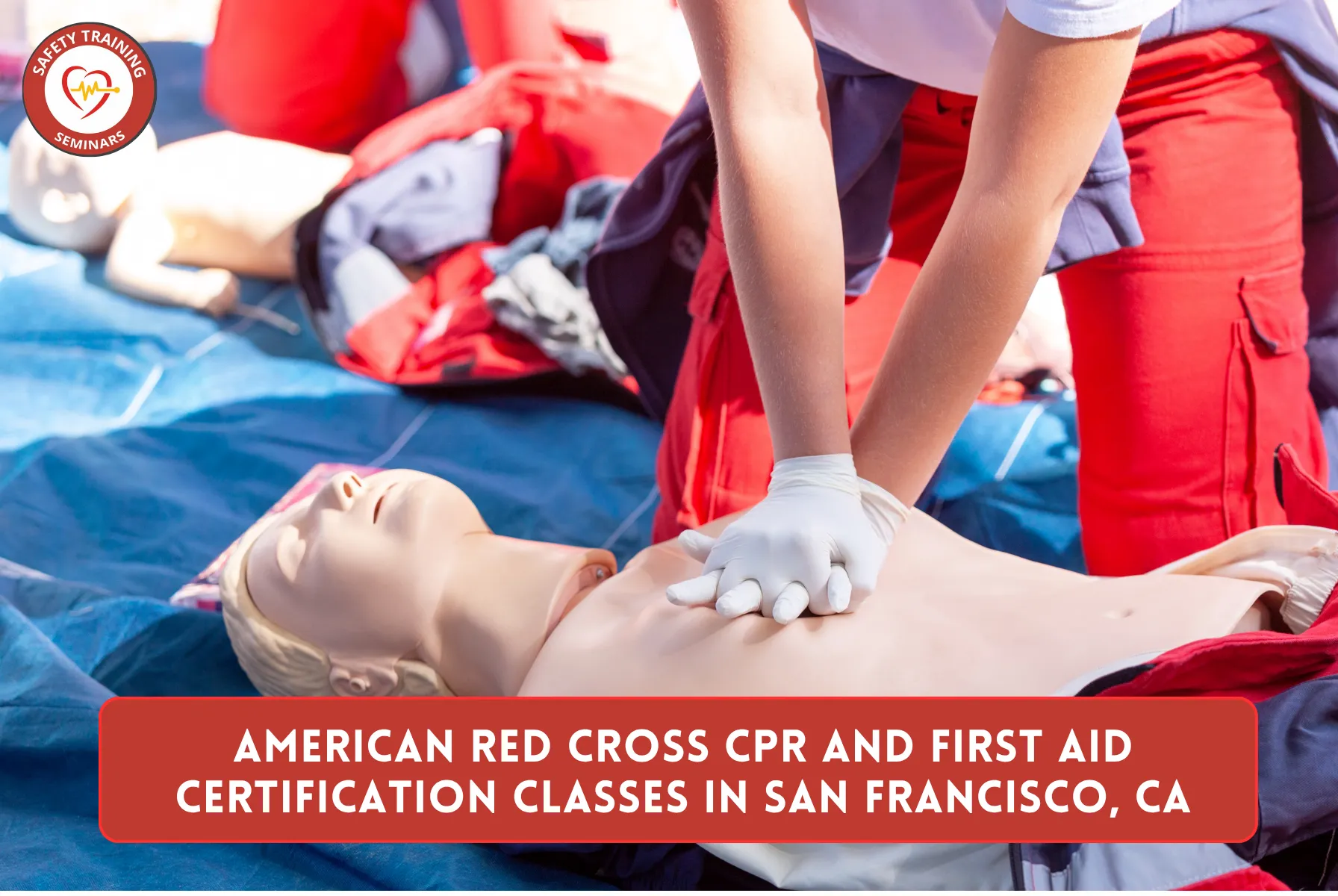
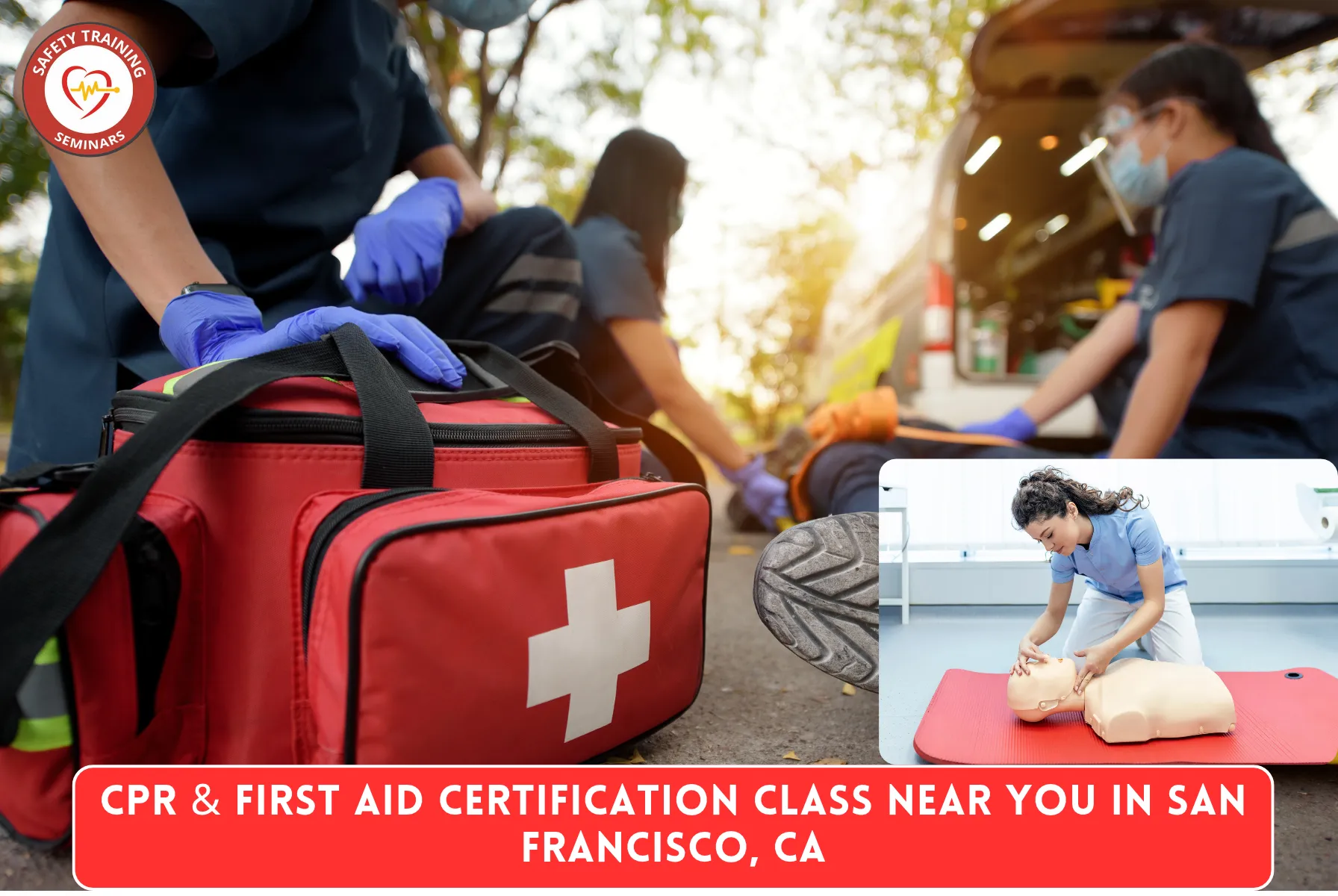
If you enter nearly any newer office tower, theater, or campus building in San Francisco, there is a high probability that an automated external defibrillator (AED) is strategically placed near the foyer. AEDs are mandated by California law in numerous buildings that were constructed after 2017. Building proprietors are required to inform tenants annually of the location of these devices and the appropriate contact person for CPR and AED training. The device is incapable of performing any action until a person in close proximity recognizes cardiac arrest, initiates compressions, and opens the case.
That is the practical purpose of a CPR & First Aid certification class: to equip non-clinicians, not clinicians, with the necessary skills to respond in the brief period of time before emergency medical services arrive. This article is intended for a variety of individuals, including office workers, safety coordinators, childcare and preschool staff, teachers, coaches, parents, and caregivers throughout the city. It also assists nursing and allied health students in determining whether they require this course or healthcare-provider Basic Life Support (BLS). Additionally, it provides detailed instructions on how to register at the Safety Training Seminars training center in the Sunset District.
From the Office Lobby to Ocean Beach: Where San Francisco Bystanders Step In
San Francisco’s emergency system is strong. Zuckerberg San Francisco General Hospital operates the only Level I trauma center serving the city and northern San Mateo County, and UCSF Health, Kaiser Permanente, and other systems run emergency departments across the city, including the UCSF Parnassus campus near the Inner Sunset and St. Mary’s on Stanyan Street. None of that changes what happens in the first minutes after someone collapses on a sidewalk, in a break room, or at a playground. Bystander action covers that gap.
The settings where people in this city most often put CPR and First Aid skills to use look like this:
- Offices and coworking spaces in the Financial District, SoMa, and Mission Bay, where a building AED may be steps away but staff have never practiced with one.
- Childcare centers, preschools, and family childcare homes in residential neighborhoods such as the Sunset, Richmond, and Excelsior, where staff are responsible for infants and toddlers.
- Schools, youth sports, and recreation programs in Golden Gate Park, along the Great Highway, and on neighborhood fields.
- Restaurants, retail, gyms, and hospitality, where choking, burns, cuts, and sudden illness are routine risks.
- Homes with infants, older adults, or relatives with heart conditions or severe allergies.
What the Course Covers, Matched to Real Emergencies
A CPR and First Aid course is designed for lay responders, meaning people with little or no medical training. The American Heart Association’s Heartsaver First Aid CPR AED course, for example, is built for anyone who needs a course completion card for a job or a regulatory requirement such as OSHA, and for anyone who simply wants to be ready. Most nationally recognized courses cover the same core ground:
| Emergency | What learners practice |
| Sudden cardiac arrest | Recognizing unresponsiveness and abnormal breathing, calling 911, high-quality chest compressions, rescue breaths with a barrier device |
| AED use | Turning on the device, placing pads correctly, following voice prompts, staying clear during analysis and shock |
| Choking | Responding to a choking adult or child, and back blows and chest thrusts for infants when pediatric content is included |
| Severe bleeding | Applying direct pressure and recognizing signs of shock |
| Heart attack and stroke | Recognizing warning signs and getting emergency help quickly |
| Allergic reactions | Recognizing anaphylaxis and assisting with an epinephrine auto-injector |
| Injuries and environmental emergencies | Burns, sprains, suspected fractures, and heat- or cold-related illness |
Two definitions help here. CPR (cardiopulmonary resuscitation) uses chest compressions, with or without rescue breaths, to keep blood flowing to the brain when the heart stops pumping effectively. An AED is a portable device that checks the heart’s rhythm and delivers a shock only when it detects a rhythm that a shock can treat.
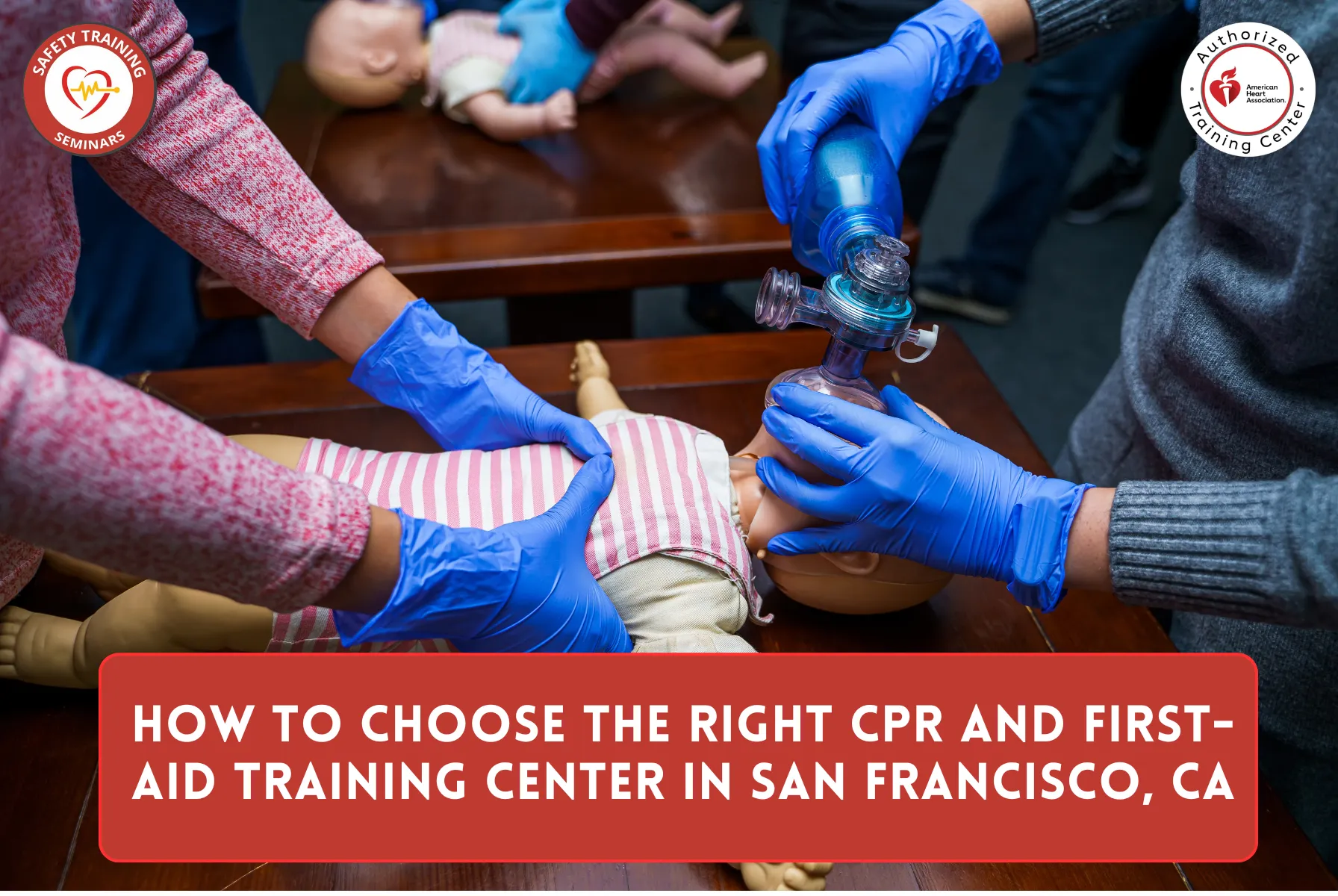
Many courses now use a blended format. Learners complete knowledge content online at their own pace, then demonstrate skills on adult and infant manikins during a hands-on session. Course completion cards from major national programs are typically valid for two years.
Requirements San Franciscans Should Check Before Enrolling
No single rule decides which course you need. The answer comes from whoever will review your card, and in San Francisco that is usually one of four sources.
Employers and building AED programs
Under California Health and Safety Code Section 19300, AEDs are required in many buildings constructed on or after January 1, 2017, including business and educational buildings with an occupancy of 200 or more and assembly buildings with more than 300 occupants. Section 1797.196 asks building owners to notify tenants annually about AED locations and who to contact for voluntary CPR and AED training. Separately, federal OSHA standards expect workplaces to have trained First Aid responders available when medical care is not close by. Employers set the specific course requirement, so safety coordinators should confirm it in their own emergency action plan.
Licensed childcare programs
California Health and Safety Code Section 1596.866 requires that licensed childcare centers and family childcare homes have staff trained in pediatric First Aid and pediatric CPR, along with preventive health and safety training, and that this training stay current, with renewal every two years. Courses must come from programs approved through the California Emergency Medical Services Authority (EMSA). A general adult-only workplace CPR card does not meet this standard.
Schools and youth programs
California high schools that require a health course for graduation must include CPR instruction in it. Teachers, coaches, and after-school staff, however, follow whatever their district, league, or program specifies, which often means adult, child, and infant CPR with First Aid.
Nursing and allied health programs
San Francisco has a dense healthcare education community, including the UCSF School of Nursing, the San Francisco State University School of Nursing, the University of San Francisco, and the Registered Nursing program at City College of San Francisco. Students in these programs often train at clinical sites such as UCSF Health, Zuckerberg San Francisco General, and Kaiser Permanente. Clinical placements and hospital employers generally expect healthcare-provider BLS, a course focused on team-based resuscitation, two-rescuer CPR, and bag-mask ventilation, rather than a lay-responder CPR and First Aid card. Confirm with your program coordinator before you book.
A Quick Decision Guide
- You care for children in a licensed setting: choose EMSA-approved pediatric CPR and First Aid.
- You work in an office, store, gym, or restaurant: choose adult CPR, AED, and First Aid, and add child and infant content if your workplace serves families.
- You teach or coach: choose adult, child, and infant CPR with First Aid, then confirm with your district or league.
- You are a parent, grandparent, or caregiver: choose a course with the age groups you care for most.
- You are a nursing, medical, dental, or EMT student or clinician: you most likely need AHA BLS, not CPR and First Aid.
- You are unsure: ask whoever will review your card which course and issuing organization they accept, and whether a hands-on skills session is required.
Training on Taraval Street: Safety Training Seminars in the Sunset District
An American Heart Association Training Center that has been serving California since 1989, Safety Training Seminars, operates a training center in the Sunset District at 1951 Taraval Street, San Francisco, CA 94116. The center is located near 30th Avenue on Taraval. Seven days a week, the hours are posted from 8 a.m. to 10 p.m. The location page of the company indicates that the Muni Metro L Taraval line stops directly outside, and the 28 and 29 bus routes provide access to the area. Consequently, the center is practical for residents of the Sunset, Parkside, and Richmond districts, as well as Daly City and Pacifica.
The Sunset Center offers a CPR and First Aid course that is available to the general public. This course covers adult, child, and infant CPR and is a combination of online learning and a hands-on skills session. In addition to an EMSA Preventive Health and Safety course, childcare providers will discover a pediatric CPR and First Aid option that is legitimate for California childcare. The same location is also available for healthcare students and professionals to complete AHA BLS, ACLS, and PALS.
Before enrolling, compare your requirement against the course details listed for CPR & First Aid certification classes in San Francisco, including the type of course completion card issued.
Common Questions from San Francisco Learners
Do San Francisco office workers have to take CPR training?
California does not require every employee to complete CPR. Requirements come from individual employers, OSHA First Aid expectations, and building AED programs, which must tell tenants how to access voluntary CPR and AED training.
Is a CPR and First Aid card the same as BLS?
No. CPR and First Aid is designed for lay responders and adds First Aid topics. BLS is a healthcare-provider course focused on team resuscitation and is what most nursing programs and hospitals expect.
What do San Francisco daycare and preschool staff need?
Licensed childcare providers in California need pediatric First Aid and pediatric CPR from an EMSA-approved program, plus preventive health and safety training, kept current every two years.
Can I reach the Sunset training center without a car?
Yes. According to Safety Training Seminars, the Muni Metro L Taraval line stops directly outside 1951 Taraval Street, and the 28 and 29 bus routes serve the area.
Does the course include infant CPR?
It depends on the course. Many CPR and First Aid courses cover adult, child, and infant CPR, while some cover adults only. Choose pediatric content if you care for or work with young children.
How long does a CPR and First Aid card last?
Course completion cards from major national programs are typically valid for two years. Plan renewal before the expiration date printed on your card or eCard.
Your Next Step
Start by identifying who will review your card: an employer, a childcare licensing inspector, a school district, or a clinical program. That single answer tells you whether you need adult-focused CPR and First Aid, EMSA-approved pediatric training, or healthcare-provider BLS. Once you know, review current dates and course details for San Francisco CPR and First Aid certification course options at the Sunset District training center and book the session that fits your week.