A heart attack or stroke can happen almost anywhere in San Francisco that offers medical care. It could happen in the trauma bay on Potrero Avenue, in an inpatient unit at Parnassus Heights, in a teaching dentist clinic in SoMa, or in an Excelsior neighborhood primary care office. Even though the situations couldn’t be more different, the first few minutes of the response are always the same: recognize the cardiac arrest, start good CPR, get an AED on the patient, and get the team to work together.
Basic Life Support is the name of that shared plan. This guide explains what the American Heart Association (AHA) BLS course teaches, how it can be used in San Francisco’s healthcare settings, and what you should check before you book. It’s useful whether you are taking the course for the first time or want to renew your certification before your card expires.
Basic Life Support, Defined for the People Who Deliver Care
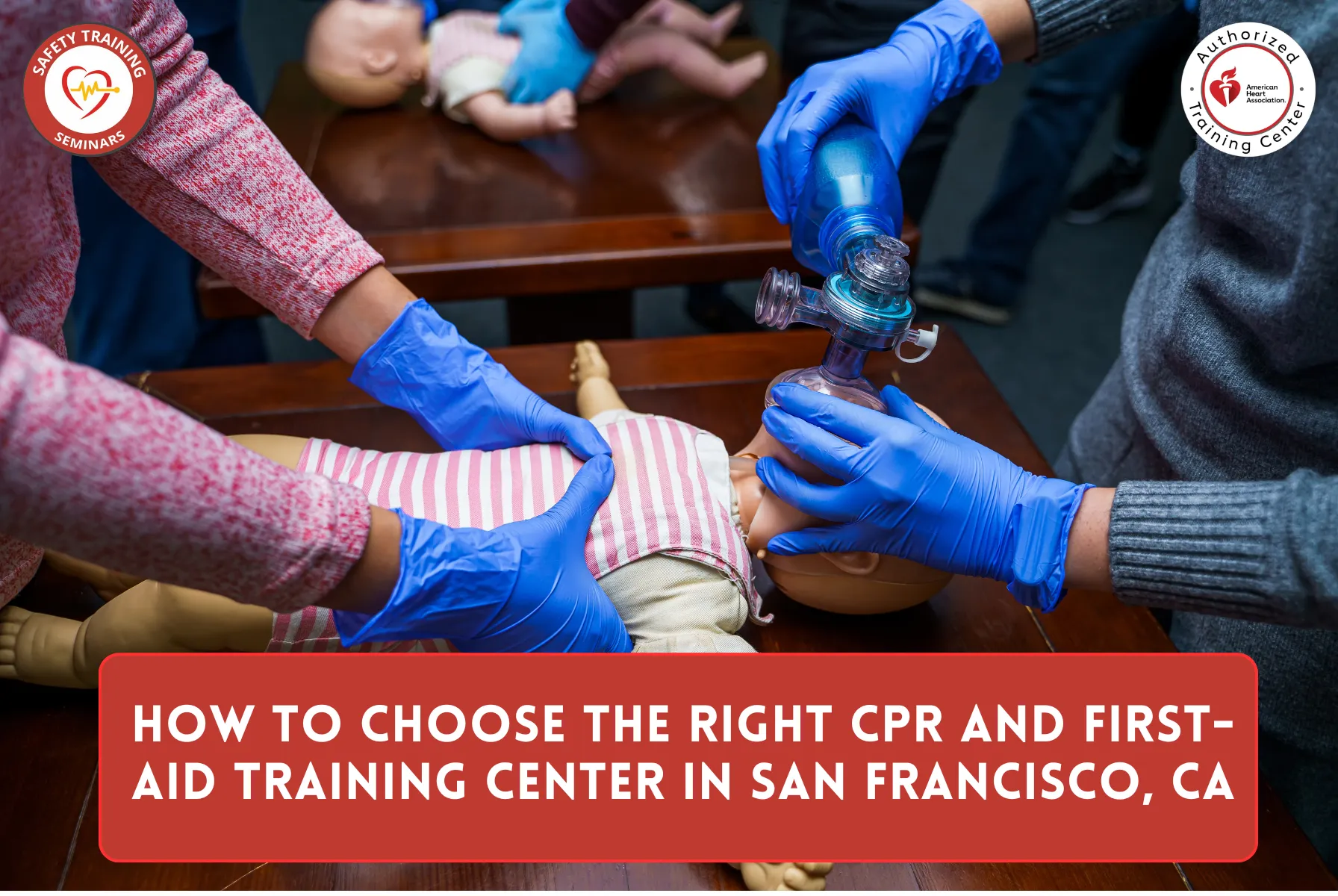
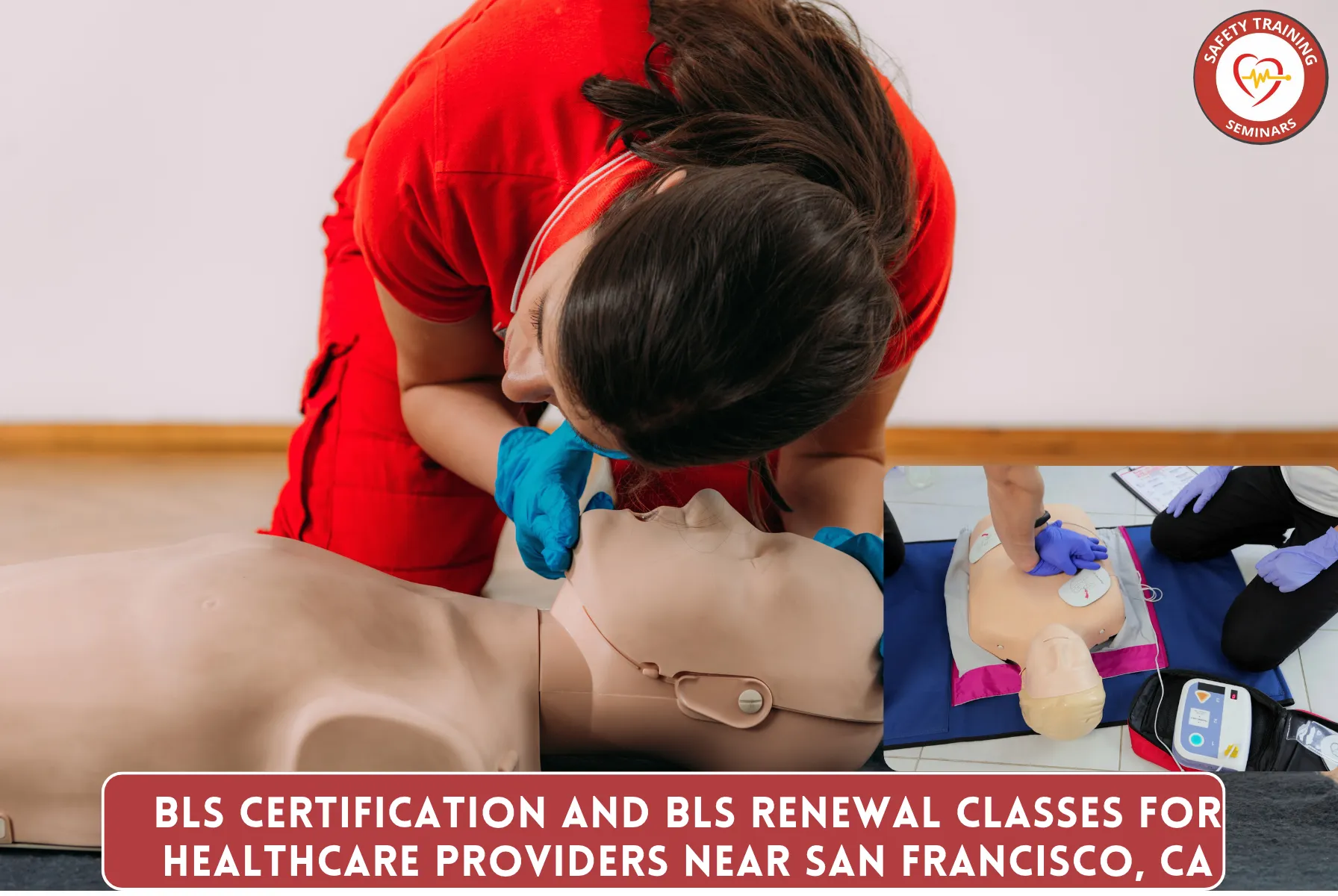
Basic Life Support (BLS) is the AHA’s resuscitation course for healthcare professionals. The AHA says the course teaches both single-rescuer and team skills for prehospital and in-facility settings, with an emphasis on high-quality CPR and team dynamics.
In practical terms, AHA BLS training prepares you to:
- Quickly assess an unresponsive patient for breathing and a pulse, and recognize cardiac arrest.
- Deliver high-quality CPR to adults, children, and infants, maintaining effective compressions with minimal pauses.
- Use an AED early and resume compressions right away.
- Provide ventilations with a pocket mask or bag-mask device without over-ventilating.
- Relieve choking in patients of all ages.
- Work as part of a resuscitation team, with clear roles and communication.
The current science behind these skills is the 2025 AHA Guidelines for CPR and Emergency Cardiovascular Care, which the AHA published on October 22, 2025. The AHA also announced updated HeartCode® and healthcare course materials alongside the release.
One Skill Set, Many San Francisco Care Settings
Hospitals and emergency departments
The UCSF Medical Center at Parnassus, Kaiser Permanente San Francisco Medical Center, the campuses of California Pacific Medical Center, and Zuckerberg San Francisco General Hospital and Trauma Center are all part of San Francisco’s acute care network. San Francisco and northern San Mateo County only have one Level I trauma center, and that is ZSFG. Saint Francis on Hyde Street and St. Mary’s on Stanyan Street have become part of UCSF Health and will now be called Hyde Hospital and Stanyan Hospital, respectively.
BLS is the first part of a bigger response in a hospital unit. A lot of the time, nurses, patient care technicians, respiratory therapists, and doctors are expected to start chest compressions and call for help before an advanced team gets there. At that point, clean hand-offs depend on everyone having the same BLS foundation.
Dental clinics and teaching clinics
Dental settings are a reminder that BLS is not just for hospitals. University of the Pacific’s Arthur A. Dugoni School of Dentistry runs its main clinics at 155 Fifth Street in SoMa, and City College of San Francisco trains dental assistants at its Ocean Campus. In a dental office, the team may be small, the patient may be sedated, and EMS may be several minutes away. That makes rapid recognition, a working AED, and practiced roles especially important.
Outpatient, urgent care, and community clinics
Medical assistants, front-line nurses, and clinical support staff across the city’s primary care and urgent care network may be the first trained responders if a patient collapses in a waiting room or exam room. Requirements vary widely by employer, so outpatient staff should confirm whether their role calls for BLS or a different AHA course.
What a Coordinated BLS Response Looks Like
One of the most useful parts of BLS training for working clinicians is practicing the response as a team rather than as individuals. A well-run response usually has a few defined roles:
- Compressor: delivers continuous, high-quality chest compressions and rotates with another rescuer at regular intervals to limit fatigue.
- Airway/ventilation: manages the airway and delivers breaths with a bag-mask device.
- AED operator: brings the AED, places pads, and prompts the team to pause only for rhythm analysis and shocks.
- Team leader: keeps track of time, assigns tasks, watches CPR quality, and briefs arriving advanced providers.
Closed-loop communication ties these roles together. The leader gives a specific instruction to a named person, the person repeats it back, and then confirms when it is done. In a busy San Francisco emergency department or a two-chair dental office alike, that habit reduces missed steps and long pauses in compressions.
Where BLS Ends and Heartsaver CPR Begins
Not everyone in a healthcare building needs BLS. The AHA’s Heartsaver courses serve people with limited or no medical training who need CPR documentation for a job or regulatory requirement. A receptionist, a facilities team member, or a childcare worker may be well served by Heartsaver, while patient-facing clinical staff are more often asked for BLS. Your employer, school, or regulatory body decides which one applies, so ask before you register.
First Course or Renewal? Questions to Answer Before You Book
Have you completed AHA BLS before? If not, an initial course is the right place to start. Many San Francisco learners in this position are students. City College of San Francisco’s Registered Nursing program, based at its Ocean Campus, combines skills lab practice with patient care experience in hospitals and facilities around the city. SF State and USF offer prelicensure nursing degrees, and UCSF’s School of Nursing focuses on graduate nursing education. Each program and its clinical partners set their own BLS expectations, so check your student handbook or clinical coordinator before rotations begin.
When was your current card issued? According to the AHA, course completion cards are valid for two years through the end of the month in which they were issued. Look at your eCard’s issue date, then work backward from any earlier deadline your employer sets.
Do you qualify for a renewal option? Renewal eligibility, especially if your card has lapsed, is a training-center policy. Confirm it with the provider before booking.
Does your employer use a specific program? Some hospitals manage BLS through internal programs, such as the AHA’s Resuscitation Quality Improvement (RQI), or require particular course formats. Your unit educator or HR department can tell you what counts.
Even experienced clinicians benefit from a renewal course. Real arrests are relatively rare for many professionals, and hands-on practice with feedback on depth, rate, and recoil keeps those skills sharp.
What You Leave With: The AHA Course Completion eCard
The AHA lets you learn BLS in a school setting or a mixed setting. In this type of learning, there is an online HeartCode® BLS lesson and then a skills session that takes place in person. It is also on the list of the American Heart Association (AHA). As per the American Heart Association (AHA), all of the BLS choices teach the same science-based skills and lead to the same eCard when the course is over.
You should know these two things. To begin, the American Heart Association (AHA) says that CPR classes must include a hands-on skills session. This means that doing the work online alone will not get you a card. Second, the eCard shows that the course was finished. It’s not the same as a license to work from the California Board of Registered Nursing or any other state board, and it doesn’t mean that every job or program will accept it.
BLS Classes in the Sunset: Safety Training Seminars on Taraval Street
Safety Training Seminars, an AHA Training Center, operates a Sunset District training center at 1951 Taraval Street, San Francisco, CA 94116. The classroom sits on Taraval near the corner of 30th Avenue. The company lists office hours of 8 a.m. to 10 p.m. daily for this location.
The Taraval Street center offers AHA BLS for healthcare providers, along with ACLS, PALS, and CPR and First Aid courses. Nurses, students, dental teams, and other clinicians can review current options for BLS training in San Francisco, including initial and renewal courses. Formats, schedules, and pricing can change, so the course page is the most reliable place to check details and register. Learners who meet all course requirements receive an AHA Course Completion eCard.
Frequently Asked Questions
Is the Safety Training Seminars Taraval Street center in San Francisco?
Yes. It is at 1951 Taraval Street in San Francisco’s Sunset District, ZIP code 94116. Safety Training Seminars also lists other San Francisco locations on its website.
I work in a dental office. Do I need BLS or a Heartsaver course?
It depends on your role and your employer. Clinical team members such as dentists, hygienists, and dental assistants are often asked to complete BLS, while non-clinical staff may need Heartsaver. Your office manager can confirm which course is required.
Will my BLS renewal reflect the 2025 AHA Guidelines?
The AHA published the 2025 Guidelines in October 2025 and announced updated course materials alongside them. Your course will cover the current content, so a renewal is a good time to catch up on any changes since your last class.
My hospital uses RQI. Can I take a classroom BLS renewal instead?
Possibly, but only your employer can answer that. Some organizations require a specific program or format for staff. Ask your unit educator or HR department before booking an outside course.
How do I find a renewal class that fits a rotating shift schedule?
Start by noting your card’s expiration month and any employer deadline. Then compare available BLS renewal classes in San Francisco against your schedule, and consider whether a blended format your employer accepts would reduce time in the classroom.
Keep the Playbook Fresh
Despite the fact that San Francisco’s healthcare settings are extremely diverse, ranging from the city’s only Level I trauma center to small dentists and primary care clinics, the first few minutes of a cardiac arrest require the same basic life support abilities in every location. This is because the heart is the most important organ in the body. Find out what your employer or program expects from you, find out the month in which your card will expire, and choose an initial or renewal course that is appropriate for your current and future requirements. In the case that you are prepared, the Taraval Street facility of Safety Training Seminars provides an alternative for AHA Basic Life Support training in the Sunset District.