San Francisco clinicians who need Pediatric Advanced Life Support can take an American Heart Association PALS class at Safety Training Seminars’ Sunset District training center on Taraval Street. The course uses a blended format. You complete the AHA’s online PALS coursework at home, then come to the Sunset site for a short hands-on skills check. Safety Training Seminars says students who pass both parts receive their AHA PALS eCard the same day.
That location works especially well for people who live or work on the west side of the city. The provider also lists other San Francisco training sites, which helps if you’d rather certify near Mission Bay or downtown. Below is what you need to know to pick the right PALS certification course in San Francisco and arrive ready to pass.
Why PALS Matters So Much in San Francisco
San Francisco concentrates a lot of pediatric acute care in a small area. UCSF Benioff Children’s Hospital San Francisco, on the Mission Bay campus, describes itself as the city’s only children’s hospital. Its emergency department treats infants, children, and teens around the clock. The hospital also runs a 20-bed pediatric intensive care unit and a pediatric cardiac intensive care unit. Zuckerberg San Francisco General Hospital and Trauma Center in the Mission District is the city and county hospital and the designated regional trauma center.
Add urgent care clinics, outpatient pediatric practices, and the paramedics who transport sick children across the city, and you have a large workforce that may need current pediatric resuscitation training. That doesn’t mean every role requires PALS. Requirements depend on the employer, the unit, and the job description. Many clinicians who regularly care for acutely ill children are asked to keep an active AHA PALS card, though.
What You Learn in an AHA PALS Course
PALS is the American Heart Association’s advanced pediatric course for healthcare professionals. It assumes you already have solid Basic Life Support skills and builds from there. The course focuses on recognizing a sick child early and intervening before the child goes into cardiac arrest.
Core content includes:
- The PALS systematic approach: a structured method to evaluate, identify, and intervene
- Respiratory emergencies: distinguishing respiratory distress from respiratory failure and managing each one
- Shock: recognizing hypovolemic, distributive, cardiogenic, and obstructive shock
- Rhythm disturbances: managing pediatric bradycardia and tachycardia
- Cardiac arrest: pediatric CPR, defibrillation, and resuscitation medications
- Resuscitation teamwork: clear roles, closed-loop communication, and debriefing
The AHA PALS Provider card is valid for two years.
How the Blended Format Works
Safety Training Seminars lists its San Francisco PALS course as “online and skills.” Here is how the two parts compare:
| Part | Where it happens | Estimated time | What it covers |
| Online coursework | At home or anywhere with internet access | About 2–3 hours | AHA PALS lessons, patient cases, and the knowledge assessment |
| Skills session | In person at a San Francisco training site | About 30 minutes | Hands-on demonstration of pediatric resuscitation skills |
The time estimates come from the provider. Your own pace may differ. A nurse who works in a pediatric emergency department every day may move through the cases quickly, while someone who rarely treats children may want extra study time for rhythms and drug dosing.
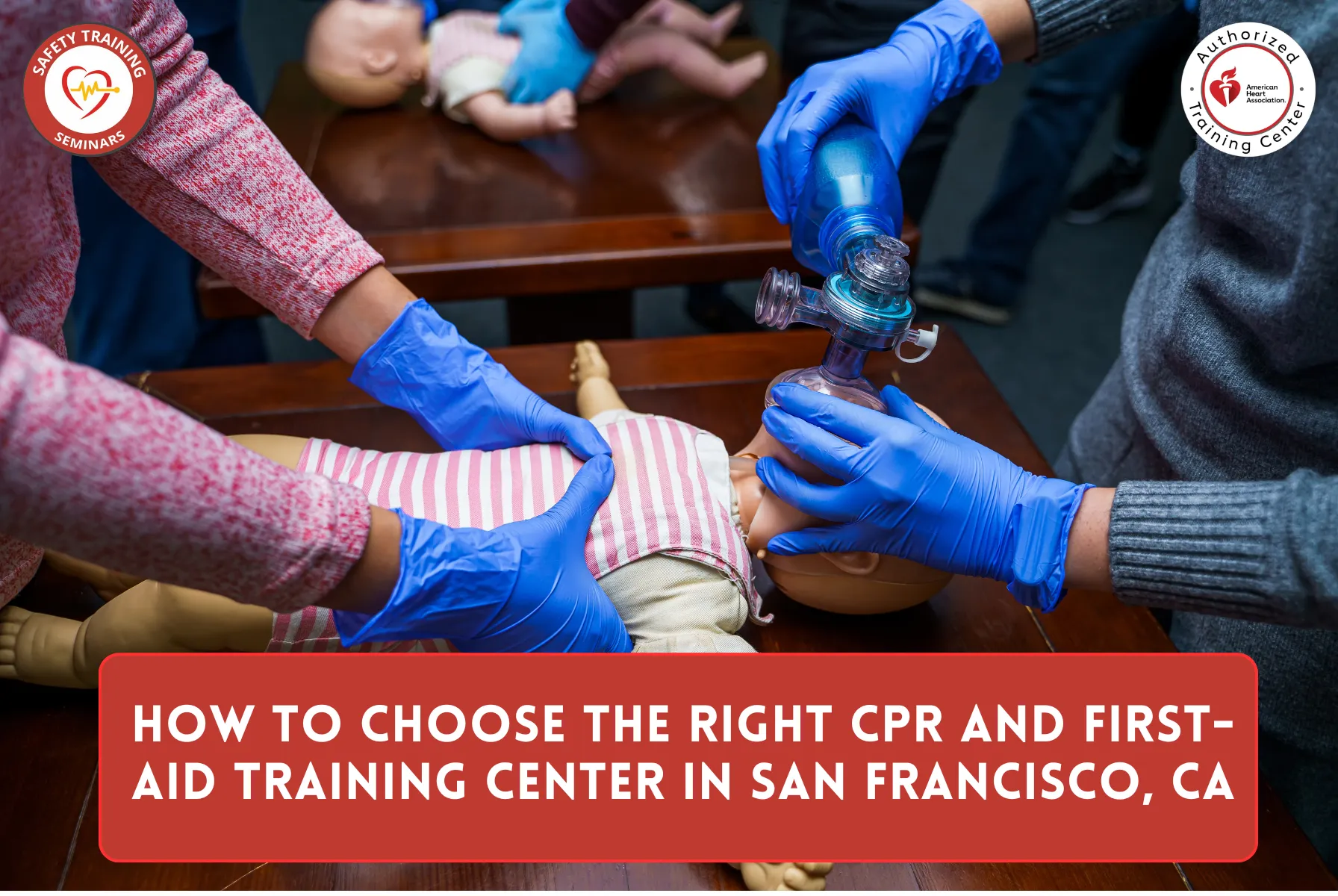
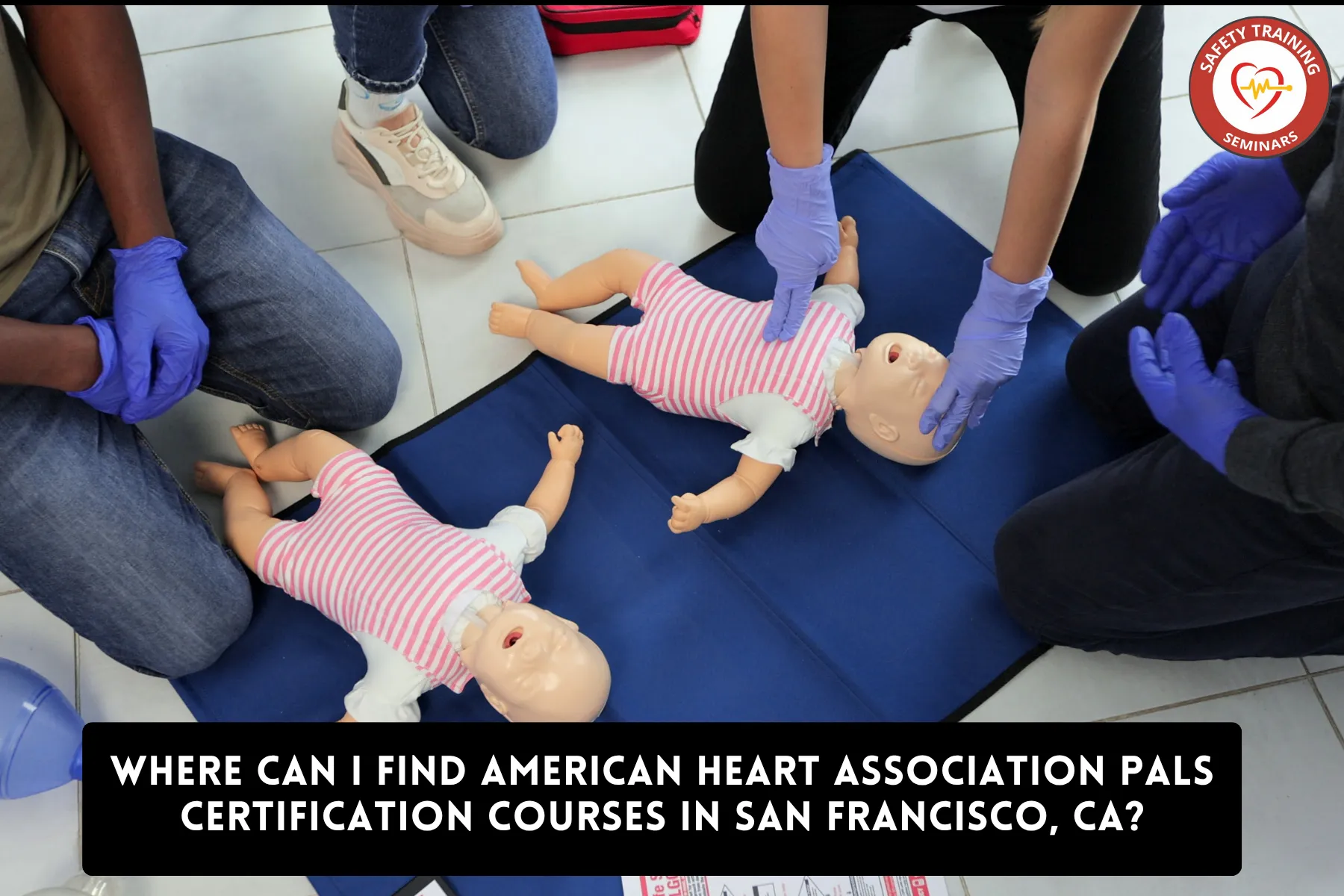
The provider also notes that several of its San Francisco skills sessions use voice-assisted manikins. Some students like working at their own pace without an instructor. If you prefer live feedback from a person, ask about the session format when you book.
Training in the Sunset: The Taraval Street Location
The Sunset training center sits on the Taraval Street corridor in the city’s southwest neighborhoods:
1951 Taraval Street, San Francisco, CA 94116
The location makes the most sense for:
- People who live in the Outer and Inner Sunset, Parkside, or nearby west-side neighborhoods
- Clinicians who would rather avoid driving and parking downtown or in Mission Bay
- Transit riders: Muni’s L Taraval light rail runs along Taraval Street between the SF Zoo and Embarcadero Station, and rail service returned to the line in September 2024 after a major corridor rebuild
According to Safety Training Seminars, the site is reachable from 19th Avenue, Sunset Boulevard, and the Great Highway. The provider says there is street parking nearby and Muni stops close by. Street parking in the Sunset can be tight at certain times of day, so give yourself a few extra minutes.
The provider lists operating hours of 8 a.m. to 10 p.m., seven days a week. That can suit clinicians coming off a day shift or fitting a skills check around night shifts. Actual appointment availability varies, so confirm your slot when you register.
Other San Francisco training sites
Safety Training Seminars also lists training locations in Mission Bay, Parnassus (UCSF), Telegraph Hill, Nob Hill, the Mission District, and Bayshore. Course availability can differ by site. Check which locations offer PALS skills sessions before you choose one close to work instead of home.
To compare course options and register, start with the PALS certification classes in San Francisco page.
A Practical Prep Plan Before Your Skills Check
Most people who struggle with PALS skills sessions aren’t missing knowledge. They’re rusty on fundamentals. Use this short plan:
- One week before: Confirm your employer wants AHA PALS (not a different pediatric course) and accepts the blended format with an in-person skills check.
- A few days before: Finish the online coursework while the material is fresh. Don’t leave it for the night before.
- The day before: Review infant CPR, especially the two-thumb encircling technique and compression depth, and practice bag-mask ventilation if you can.
- Day of: Bring proof that you finished the online portion, arrive early, and allow time to find parking or walk from the Muni stop.
If you are renewing, compare your card’s expiration date against your hospital’s credentialing deadline. Some employers want proof of renewal before the card actually expires.
PALS vs. Related Courses
Clinicians in San Francisco often juggle several certifications. Here’s how PALS fits with the others:
- BLS covers CPR and AED use for all ages. Most PALS-certified clinicians also need BLS.
- ACLS is the adult equivalent of PALS, focused on cardiac arrest and other cardiovascular emergencies in adults.
- NRP, from the American Academy of Pediatrics, covers newborn resuscitation in the delivery room. It is not a substitute for PALS.
- Pediatric CPR and First Aid is for childcare providers and the public, not for clinicians who need advanced pediatric life support.
Safety Training Seminars offers all of these at its San Francisco locations. You can browse the full lineup at Safety Training Seminars San Francisco CPR classes.
Frequently Asked Questions
Does UCSF or SF General require PALS?
It depends on the role and the unit. Pediatric emergency, pediatric ICU, and other pediatric acute care positions commonly list PALS, but each employer sets its own policy. Ask your nurse manager or medical staff office for the current requirement.
Can I get to the Taraval Street site without a car?
Yes. The L Taraval Muni line runs along Taraval Street and connects the Sunset with downtown San Francisco. Check SFMTA for current schedules before you go.
Do I need to do the online portion before my skills appointment?
Yes. The blended PALS course requires you to finish the online coursework first. The skills session verifies hands-on competency and does not replace the online learning.
Is a PALS card from the Sunset location different from one issued elsewhere?
No. An AHA PALS Provider eCard is the same credential regardless of which authorized AHA training site you complete your skills check at.
How much does PALS cost in San Francisco?
Prices change, so check the current rate when you register. Safety Training Seminars advertises price matching on its AHA courses and sometimes runs promotions on BLS, ACLS, and PALS.
I’m a first-time PALS student. Should I allow extra study time?
Usually, yes. First-time students most often find rhythm interpretation and the shock algorithms challenging. Give yourself more than the minimum time for the online cases, and review the PALS algorithms before your skills check.
Getting Certified on Your Schedule
You can find an American Heart Association PALS class in San Francisco without crossing the whole city. For west-side residents and clinicians who ride Muni, the Sunset location on Taraval Street is a practical place to complete the hands-on part of the course. Other Safety Training Seminars sites cover the rest of the city.
Confirm your employer’s requirements, finish the online coursework, and book a skills session at the location that fits your commute. Once you pass, you’ll have a current PALS card that keeps you ready for your pediatric patients and in good standing with your employer.