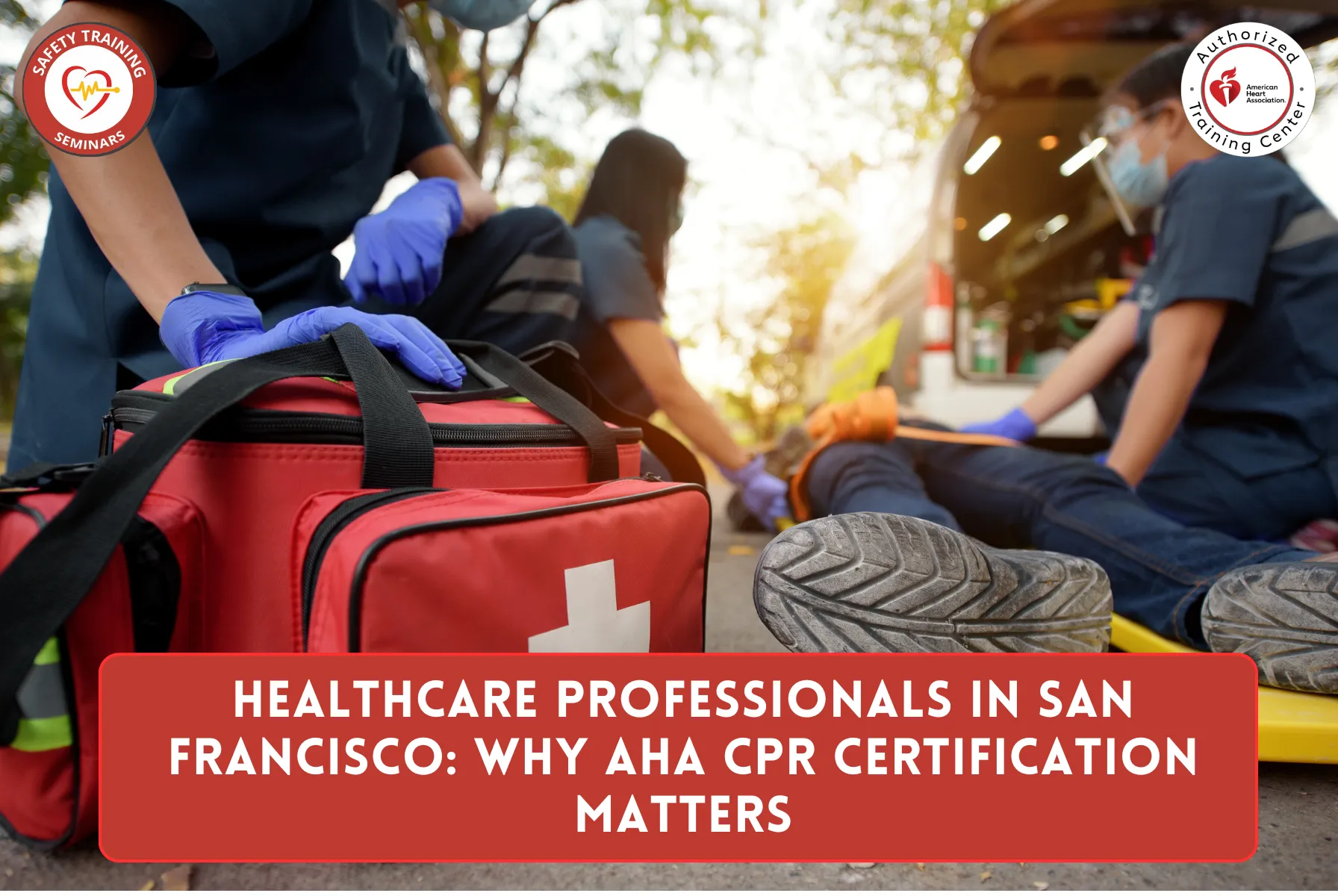
A CPR and First-aid Certification Course is more than a hiring checkbox for San Francisco healthcare professionals. When a patient loses a pulse, stops breathing, or begins choking, the first few minutes demand clear decisions and practiced hands. Nurses, medical assistants, dental teams, respiratory therapists, and students need training that matches their clinical role—not simply the cheapest card available.
That is why American Heart Association certification matters. AHA BLS, ACLS, and PALS courses emphasize evidence-based response and teamwork. Safety Training Seminars provides local options at 1951 Taraval Street, San Francisco, CA 94116.
Why AHA CPR Certification Matters in Clinical Work
The American Heart Association states that immediate CPR can double or triple a person’s chance of survival after cardiac arrest. For a healthcare professional, the response must also be technically sound and appropriate for the patient’s age and condition.
A BLS Certification Course in San Francisco, CA covers adult, child, and infant CPR, AED use, ventilation, choking relief, pulse and breathing checks, and coordinated team response. The AHA identifies BLS as training for healthcare professionals, first responders, and people enrolled in healthcare programs. Its BLS Provider eCard is valid for two years.
This distinction matters when comparing CPR classes in San Francisco, CA. A general CPR & First Aid Course in San Francisco, CA may suit nonclinical roles, while a hospital employee may need an AHA BLS Provider card.
Safety Training Seminars lists its American Heart Association BLS certification classes as blended training with online learning, hands-on skills testing, and same-day certification after successful completion.
Match the Credential to the Job
BLS for Frontline Healthcare Providers
A CPR BLS class in San Francisco, CA is commonly selected by nurses, nursing students, EMTs, medical assistants, dentists, dental hygienists, respiratory therapists, pharmacists, and other patient-facing professionals.
ACLS for Advanced Adult Care
An ACLS Certification course in San Francisco, CA is intended for clinicians involved in managing adult cardiovascular emergencies. Emergency department staff, critical-care nurses, physicians, paramedics, and some advanced practice providers may need ACLS in addition to BLS.
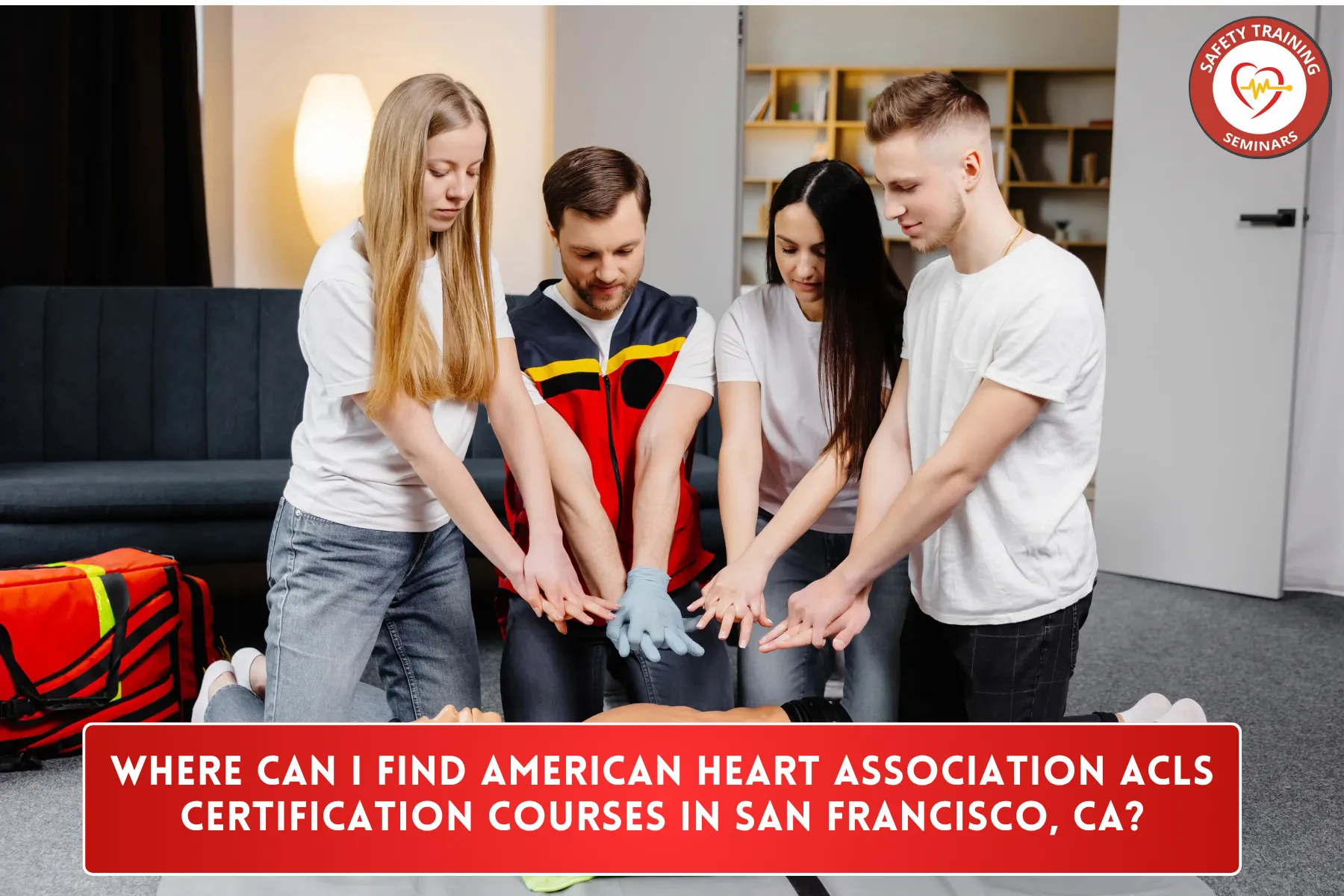
Review the center’s AHA ACLS Certification Classes in San Francisco before registering.
PALS for Pediatric Response
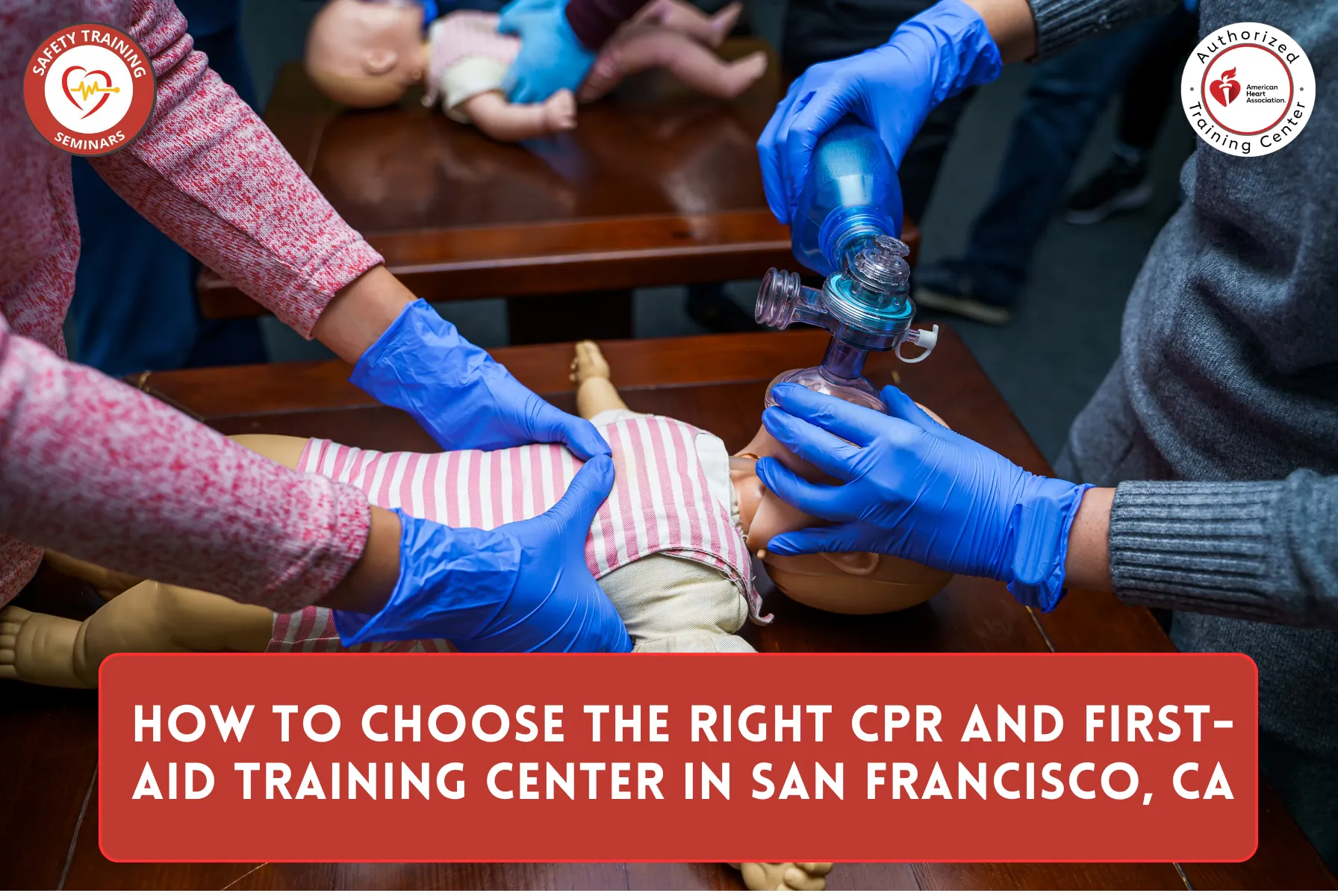
AHA PALS Certification training in San Francisco, CA serves professionals caring for infants and children in emergency or critical-care settings.
Students can review the PALS Certification training in San Francisco before registering.
CPR and First Aid for Nonclinical Roles
Teachers, childcare providers, coaches, personal trainers, security staff, office teams, and community members may need a CPR & First Aid Class in San Francisco, CA instead of BLS.
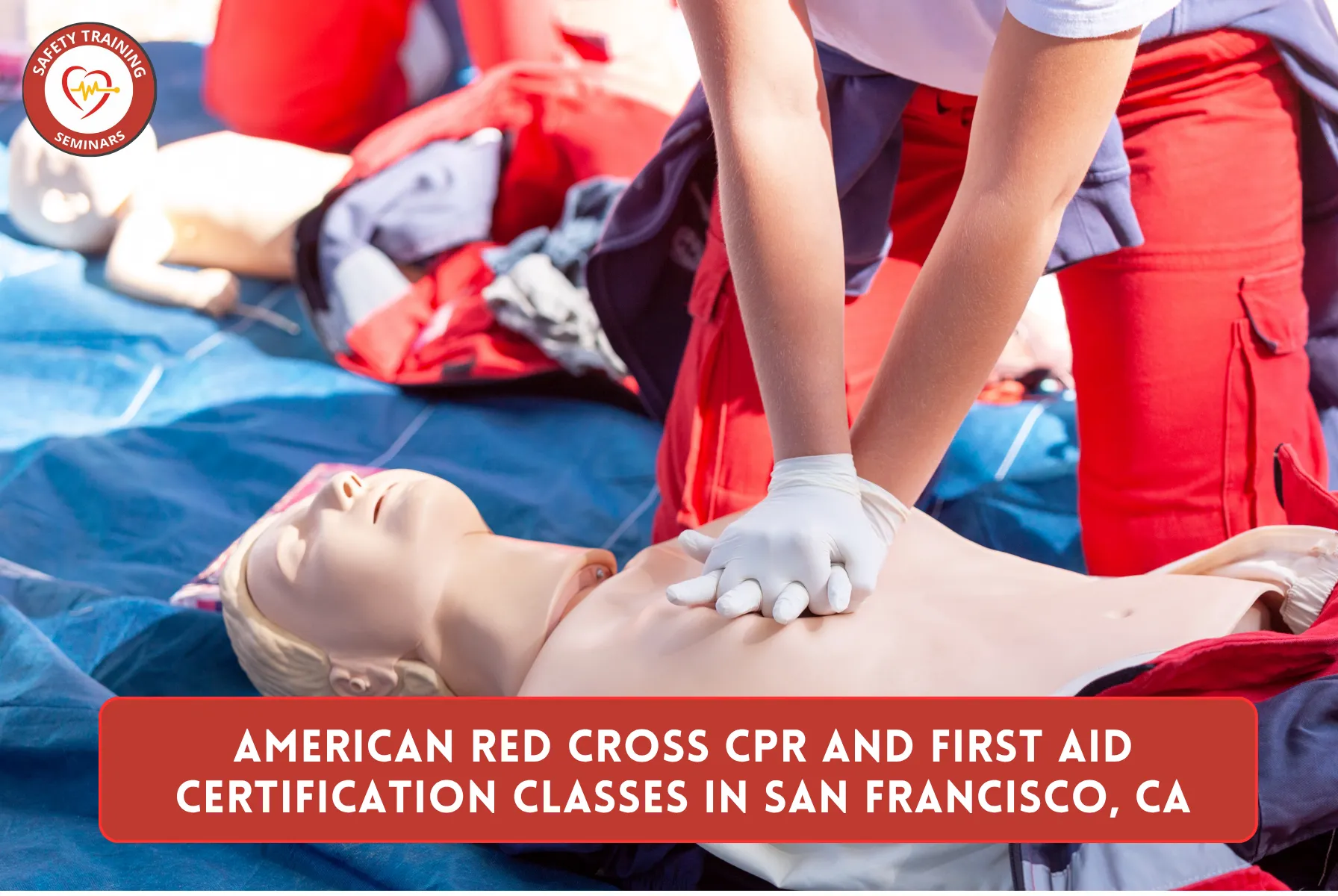
The center lists its blended CPR and First Aid certification course as a Red Cross course covering adults, children, and infants. Its healthcare courses use AHA credentials.
Two Local Situations Where the Right Card Matters
Picture a newly hired nurse preparing to start at UCSF Health’s Parnassus campus. The nurse already has a general CPR card, but onboarding asks for AHA BLS. Because the credentials are not interchangeable, the correct course must be completed before the start date.
UCSF Parnassus includes a hospital, emergency department, specialty clinics, and educational facilities.
Now consider a respiratory therapist assigned to pediatric services at UCSF Mission Bay. BLS supports the foundation of resuscitation, but the role may also require PALS because pediatric assessment and advanced response involve additional skills.
UCSF Mission Bay includes hospitals and services for children, women, and cancer care.
These examples show why “CPR certified” can mean different things depending on the workplace.
What to Expect During the Class
Safety Training Seminars uses a blended format for its core healthcare courses. Students complete required online learning first, then visit the San Francisco CPR training center for skills practice and testing.
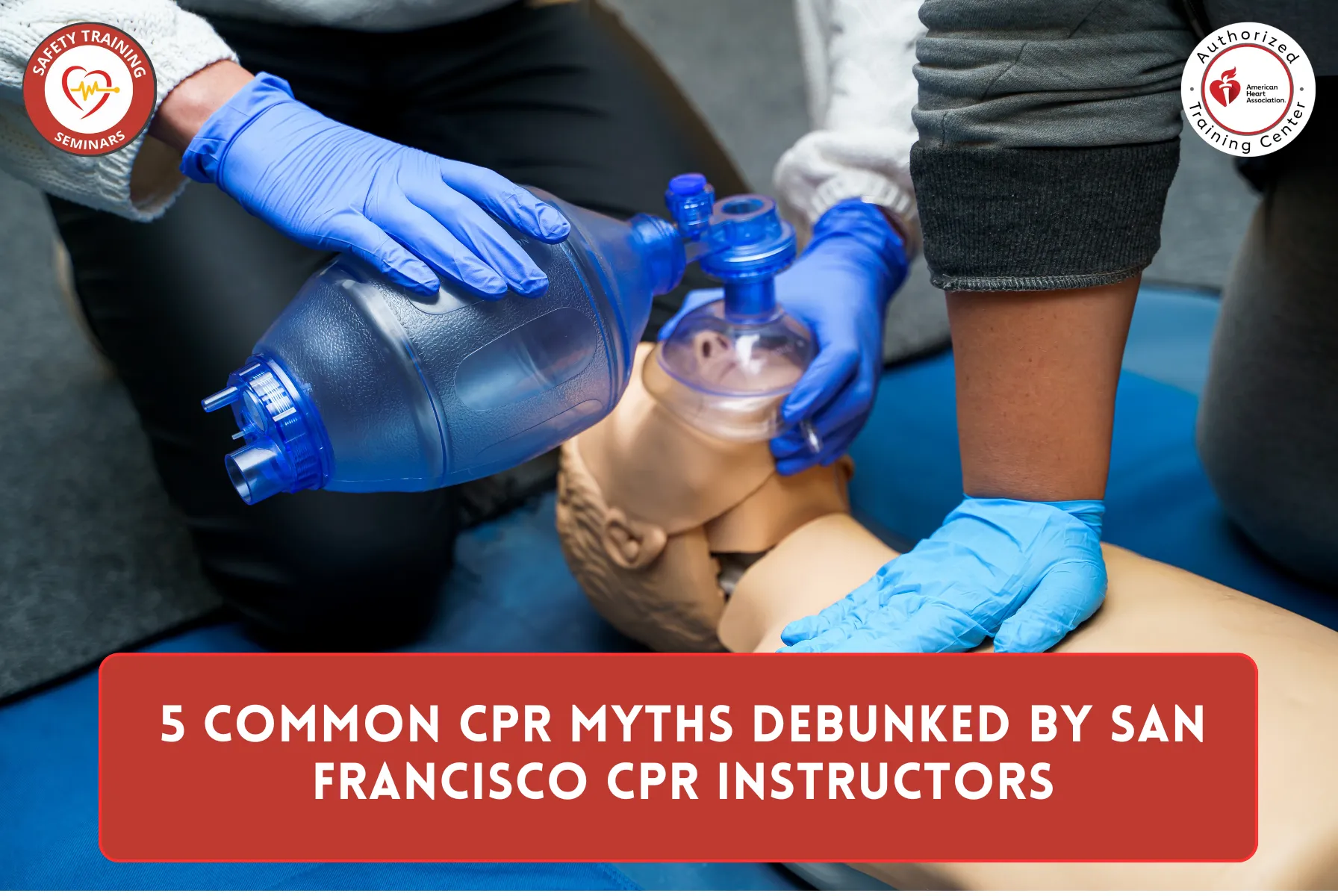
During an AHA BLS CPR Certification Class in San Francisco, CA, students can expect to practice:
- Adult, child, and infant CPR
- Correct compression rate, depth, and recoil
- Rescue breathing and ventilation
- AED operation
- Choking response
- Pulse and breathing checks
- One-rescuer and two-rescuer techniques
- Communication during team CPR
- Required skills testing
After successful completion, the center states that students receive a same-day eCard.
Healthcare professionals seeking neonatal training can review the separate NRP Certification course in San Francisco, which is not part of BLS, ACLS, or PALS.
Who Should Take Which Course?
Nurses and nursing students commonly need AHA BLS for employment or clinical placements. Students at the San Francisco State University School of Nursing should verify the exact card required by their program or clinical site.
SF State offers nursing pathways that prepare students for hospital, clinic, long-term-care, and community settings.
EMTs and paramedics generally need BLS and may also need ACLS or PALS. Medical assistants, dentists, dental hygienists, pharmacists, and respiratory therapists should match the course to their workplace and patient population.
Teachers and childcare providers usually need CPR & FIRST AID training in San Francisco, CA that includes child and infant response. Coaches, personal trainers, and security staff benefit from CPR, AED, and First Aid skills because they may be the closest trained person during an emergency.
Local Access for Busy San Francisco Professionals
The verified location is 1951 Taraval Street near 30th Avenue in the Sunset District. The site notes access from 19th Avenue, Sunset Boulevard, Great Highway, and Lakeshore Boulevard, with local street parking available.
The L Taraval runs along Taraval Street between the San Francisco Zoo area and West Portal, then continues through the Market Street subway toward downtown. This makes the center practical for students coming from the Outer Sunset, Parkside, West Portal, Lakeshore, and nearby neighborhoods.
People searching for CPR classes near San Francisco, CA can review the local course options and choose the credential that matches their role.
Four Checks Before Registration
- Ask whether the required card must come from the American Heart Association, Red Cross, or another organization.
- Confirm whether you need BLS alone or several CPR, BLS, ACLS and PALS courses in San Francisco, CA.
- Finish any assigned online module before the skills appointment.
- Check your current expiration date and the spelling of your name on the registration.
Frequently Asked Questions
Is AHA BLS the same as a general CPR certificate?
No. BLS is designed for healthcare professionals and includes clinical skills such as ventilation, pulse checks, and team response.
Do ACLS or PALS replace BLS?
Usually not. Many employers require professionals to maintain BLS alongside an advanced credential.
Can nursing students enroll before clinical placement?
Yes. Healthcare students are part of the intended BLS audience, but they should confirm the required provider and deadline with their school.
How quickly is the certification card issued?
Safety Training Seminars states that a same-day eCard is available after the required online work and hands-on test are completed successfully.
Can an expired AHA card still be renewed?
The San Francisco site states that students can complete renewal training after expiration, although employers may have separate rules about lapsed cards.
Is the Taraval Street center accessible by Muni?
Yes. The L Taraval serves Taraval Street, and the center states that Muni stops are nearby.
Which course should a childcare employee choose?
A CPR and First Aid course may be more suitable than healthcare-provider BLS, but the employee should verify current employer and California childcare requirements.
Choose a CPR and First-aid Certification Course That Fits Your Role
For San Francisco healthcare professionals, certification has real value only when the credential matches the job and the skills are practiced correctly. AHA BLS supports frontline care, while ACLS and PALS address advanced adult and pediatric response. General CPR and First Aid serves different workplace and community needs.
Safety Training Seminars provides CPR, BLS, ACLS, PALS, NRP, and First Aid course options at 1951 Taraval Street, San Francisco, CA 94116. With blended learning, flexible scheduling, hands-on testing, local transit access, and same-day cards after successful completion, the center offers a practical path for professionals balancing shifts, school, and renewal deadlines.
Review your employer or program requirement, choose the correct CPR and First-aid Certification Course, and reserve a San Francisco training time before your current card expires.