Ask anyone who has worked an ambulance shift in the Sunset District and you’ll hear the same thing: the minutes before help arrives decide almost everything. San Francisco has narrow avenues, steep grades, and a 19th Avenue that can stall at the worst possible moment. During that gap, the only person who can help is whoever happens to be standing there.
That’s the honest reason so many people across the city sign up for a CPR and First-aid Certification Course. Some need the card for a nursing program deadline. Some were told to bring one to a new job at a dental office near West Portal. Plenty of others simply have a parent with a heart condition and don’t want to freeze when it counts.
Safety Training Seminars has been teaching American Heart Association courses since 1989, and its San Francisco classroom sits at 1951 Taraval St, right along the L Taraval line in Parkside.
Quick Facts
| Feature | Details |
| Certifying body | American Heart Association (AHA) |
| Card validity | 2 years |
| Same-day eCard | Yes, on completion of the skills session |
| Format options | Classroom, or online coursework plus in-person skills check |
| Weekend and evening classes | Yes, seven days a week |
| Accepted by hospitals and schools | Yes |
| Location | 1951 Taraval St, San Francisco, CA 94116 |
| Nearby transit | L Taraval Muni, 19th Ave, Sunset Blvd |
Why a CPR and First-aid Certification Course Matters More in a City Like Ours
The American Heart Association reports that more than 350,000 cardiac arrests happen outside a hospital in the United States each year, and most of them happen at home. The AHA’s CPR resources also note that bystander CPR started immediately can double or even triple a person’s odds of survival.
Now picture it locally. A grandfather collapses on the sand at Ocean Beach while his family is a hundred yards up the shore. A first-year student in the nursing program at City College’s Ocean campus is halfway through her first clinical rotation at a skilled nursing facility when a resident starts choking at lunch. Neither situation waits for a professional. Both are survivable when someone in the room knows what to do with their hands.
Ten Reasons People in San Francisco Sign Up
1. Hospitals in the city expect an AHA card. Employers around UCSF Parnassus, Zuckerberg San Francisco General, St. Mary’s, Chinese Hospital, and Laguna Honda are used to seeing American Heart Association credentials. Bringing anything else often means a second conversation with HR you’d rather skip.
2. You leave with your certification the same day. No waiting weeks for a card in the mail. Finish the skills session, pass the check-off, and your eCard is issued that day — which matters when a start date is Monday.
3. The schedule bends around shift work. Classes run every day of the week, including weekends and evenings. Nurses coming off a night shift and students juggling coursework don’t have to burn a personal day to get certified.
4. First aid covers the emergencies you’re far more likely to see. Cardiac arrest gets the headlines, but the CPR and First Aid certification classes also cover bleeding control, burns, fractures, allergic reactions, and choking — the things that actually happen in kitchens, classrooms, and gyms.
5. Child and infant skills are taught, not skipped. Compressions on an infant are nothing like compressions on an adult. Parents in Parkside, preschool staff off Noriega, and babysitters all get real practice on child and infant manikins.
6. Workplaces increasingly require it. OSHA’s first aid standard expects trained responders on site when medical help isn’t nearby. Gyms, construction crews, restaurants, and offices across the city train staff for exactly this reason.
7. It’s the natural first step toward clinical certifications. Many students start here, then move on to American Heart Association BLS certification, and later to PALS certification training or the ACLS HeartCode blended course as their careers move forward.
8. Hands-on practice sticks in a way videos never do. Watching compressions on a screen is not the same as feeling the depth and rate under your own palms while an instructor corrects your elbow position.
9. Training close to home is training you’ll actually finish. For anyone in the Outer Sunset, Parkside, the Richmond, or out toward Lake Merced, a class on Taraval beats a cross-town trip downtown. The Outer Sunset CPR, BLS, ACLS and PALS courses page lays out what’s offered from this location.
10. Confidence is the part nobody advertises. Students say the same thing afterward: they stopped worrying about doing it wrong. That shift — from bystander to responder — is the whole point.
Who Should Take This Course?
- Nurses and nursing students — required before clinical placement and for most hospital roles
- Medical assistants and EMTs — a baseline credential employers verify at hiring
- Dentists and dental hygienists — California licensing boards and practice owners expect current certification
- Pharmacists and respiratory therapists — increasingly required for patient-facing duties
- Teachers and childcare providers — schools and licensed daycares near Sunset Blvd and Stonestown routinely require it
- Coaches and personal trainers — cardiac events during exertion are exactly when trained help matters
- Security staff and building managers — often the first to reach someone who has collapsed
- Parents and caregivers — no requirement, just a very good reason
What a Class Day Actually Looks Like
If you choose the blended format, you finish the coursework online at your own pace — usually a couple of hours at your kitchen table. Then you come in for the in-person skills session.
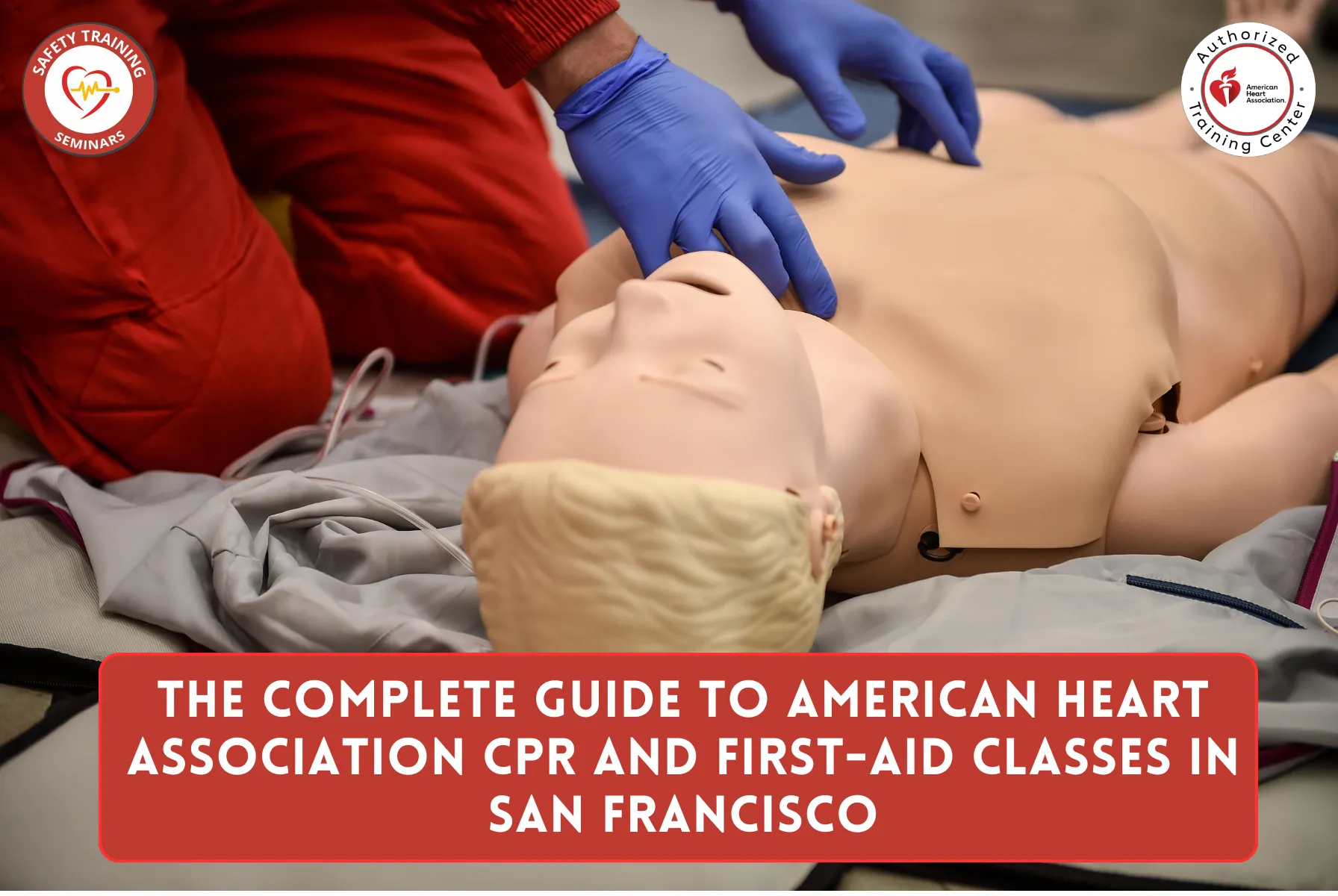
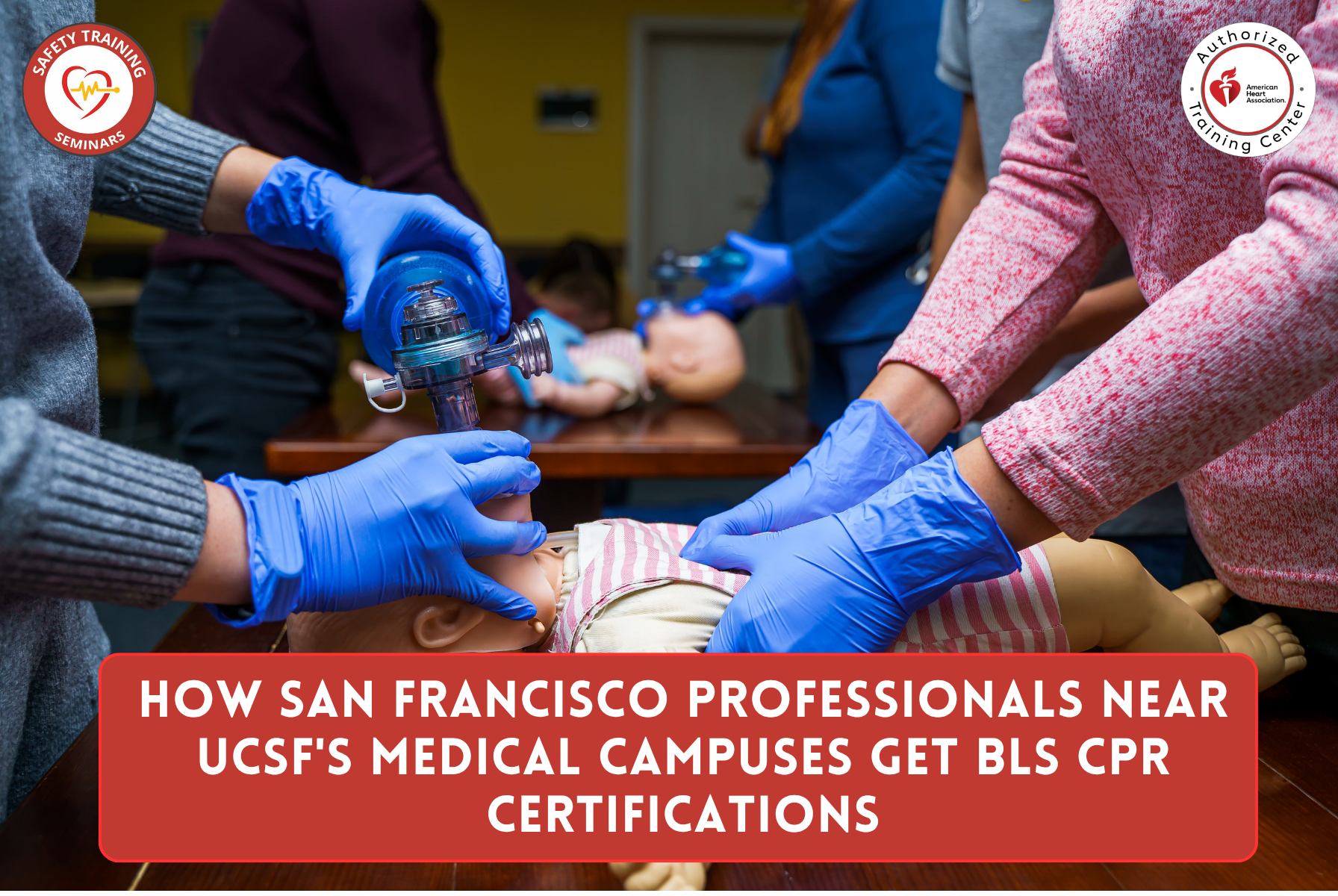
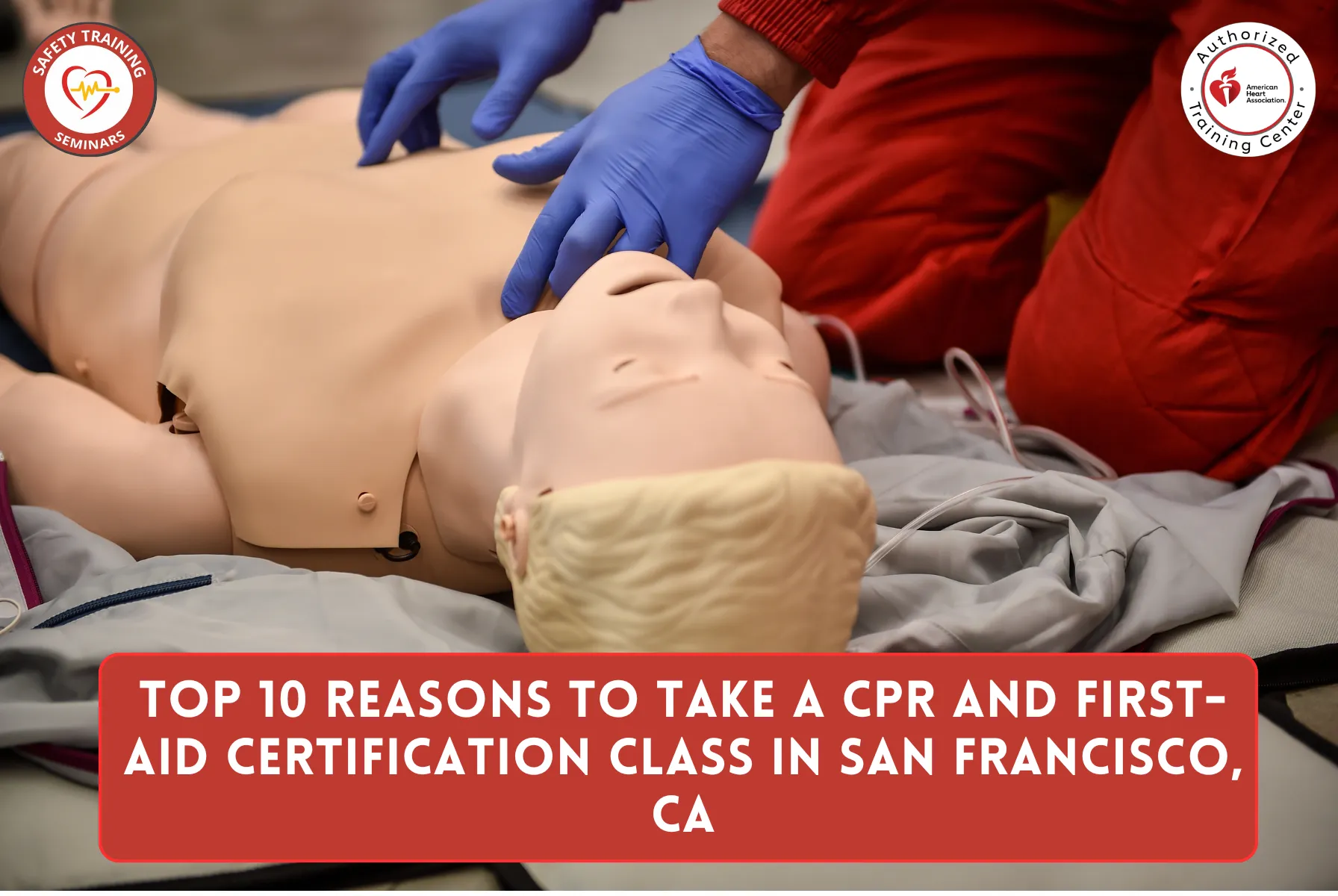
In the classroom you’ll practice adult, child, and infant CPR, learn to use an AED, clear an airway obstruction on both a conscious and unconscious patient, and work through team-based response so you’re not stepping on someone else’s compressions. Instructors watch rate, depth, and recoil, then correct you on the spot.
The skills check-off is a demonstration, not a trick question. Once you pass it, your card is issued. Students renewing an expired credential are welcome too — full details are on the CPR certification classes page.
Getting There
The training center sits at 1951 Taraval St, reachable from 19th Avenue, Sunset Boulevard, the Great Highway, and Lakeshore Boulevard. Street parking along the numbered avenues is usually workable, and the L Taraval stops within a short walk. Anyone commuting from the eastern side of the city may find the Mission Bay CPR and BLS class location closer to work.
Frequently Asked Questions
How long does the in-person portion take? The skills session is considerably shorter than a full classroom day — most students are in and out in about an hour to ninety minutes, depending on class size.
My card expired last month. Do I have to start over? No. You can still complete the course and receive a new two-year card.
Will a Bay Area hospital accept this certification? American Heart Association cards are the standard credential Bay Area hospitals, clinics, and nursing schools ask for.
Can I sign up if I’m not in healthcare at all? Absolutely. Parents, teachers, coaches, and neighbors take these classes regularly.
Is there a written exam? The blended format includes an online assessment before your skills session. It’s built to teach, not to trip you up.
Can you train my whole staff at our location? Yes — on-site group training is available for offices, schools, and businesses, with instructors bringing the manikins and equipment.
How soon can I get in? Classes run daily, so seats are often available within the same week.
Get Certified on Taraval
Certification is one of those tasks that stays on a to-do list until a deadline forces it. It doesn’t need to. A CPR and First-aid Certification Course in San Francisco takes a fraction of a day, ends with a card in your hand, and leaves you genuinely useful in an emergency on a beach, in a classroom, or at your own kitchen table.
Register online, or stop by 1951 Taraval St, San Francisco, CA 94116 — find us on Google Maps. Pick a date this week and check it off for the next two years.